


Vertical farming could free up thousands of hectares of UK farmland, but the environmental benefits depend on how that land is reused, according to research led by the University of Surrey. The study, published in the journal Cleaner Food Systems, is described as the first UK-wide assessment to consider not only the impact of vertical farming itself but also what happens if the land no longer needed for conventional farming is repurposed for climate and environmental goals.
Higher yields, higher emissions
Focusing on lettuce, the researchers found that vertical farming could reduce land demand by 93%, thanks to the high yields achieved in stacked indoor growing systems. At the same time, the study found that vertical farming currently produces higher greenhouse gas emissions than traditional field farming, because of the intensive electricity needed to run indoor lighting and climate control.
Solar comes out on top
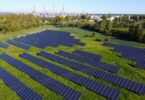
Using life cycle assessment and national-scale environmental modelling, the team tested a range of options for reusing the spared lettuce fields. Converting that land to solar power generation delivered the strongest climate benefits: the emissions avoided by generating solar electricity offset the operational emissions of vertical farming and pushed overall emissions below those of conventional field-grown lettuce. Other land-use options — including forestry, agroforestry, bioenergy crops and wind energy — were also modelled. Woodland creation and agroforestry produced positive land-carbon outcomes, but their greenhouse gas reductions were more modest than those from solar. “While it’s often discussed as a way to grow food more efficiently, our research shows the bigger opportunity may be what it allows us to do with the land no longer needed for conventional farming,” said Michael Gargaro, lead author and postgraduate researcher at Surrey’s Centre for Environment and Sustainability. “The technology still comes with environmental costs, but if the land spared is used strategically for renewable energy or environmental restoration, the overall system can bring meaningful climate benefits.”
Land sparing at scale
The study estimates that current UK lettuce production occupies around 4,000 hectares of farmland. Meeting UK lettuce demand through vertical farming would require around 590 hectares of facilities, potentially sparing about 3,410 hectares of agricultural land. Professor Zoe M Harris, director of the Centre for Environment and Sustainability at Surrey, said the UK was “under growing pressure to balance food production with climate targets, biodiversity recovery and renewable energy generation.” She noted that converting top-grade (“Grade 1”) farmland from lettuce to solar was unlikely given its food-growing potential, but said the work was a useful exploration of the role vertical farming could play in sparing land within a wider land-use strategy. The findings could help inform future UK land-use planning as competing demands on land continue to grow.
Frequently asked questions
What did the study find?
That vertical farming could sharply cut the land needed to grow crops such as lettuce, but its overall climate benefit depends on reusing the spared land well — with solar power giving the biggest gains.
Why does vertical farming have higher emissions?
Because stacked indoor growing relies on intensive electricity for lighting and climate control, which currently makes its greenhouse gas emissions higher than field farming.
Which land reuse is best for the climate?
Solar power generation delivered the strongest climate benefit in the modelling, ahead of forestry, agroforestry, bioenergy crops and wind.
How much land could be spared?
UK lettuce production uses about 4,000 hectares; meeting demand via vertical farming would need around 590 hectares, sparing roughly 3,410 hectares.