

Farmer-led environmental conservation in the UK is expanding as 585 farmers unite under the Environmental Farmers Group (EFG) to deliver a catchment-scale plan targeting biodiversity recovery, water quality and emissions reduction.
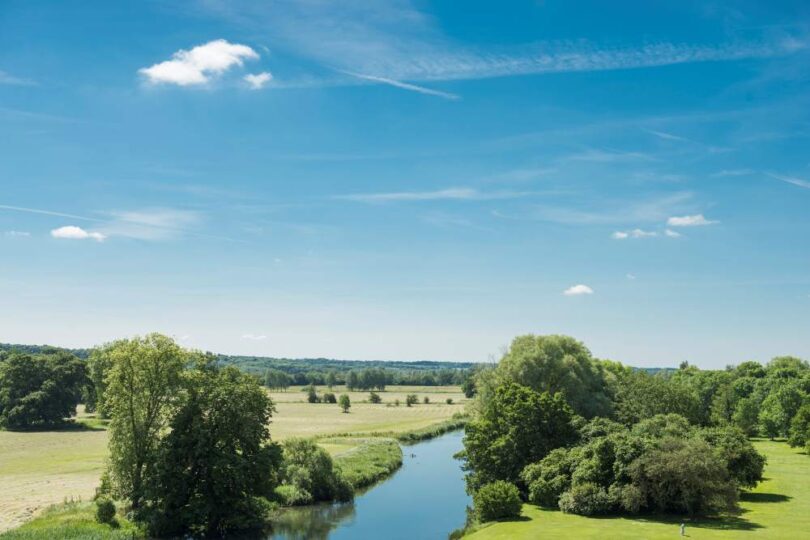
The group’s first Environmental Transition Plan focuses on the Hampshire Avon catchment, where more than 100 farmers collectively manage a significant proportion of the landscape and aim to align their activities with national environmental targets.
Scaling farmer-led environmental conservation in the UK
The initiative is designed to coordinate conservation efforts across entire landscapes rather than individual farms. By working at catchment scale, farmers aim to deliver more coherent and measurable environmental outcomes.
According to the plan, participating farmers are prepared to allocate an average of 5.5% of their land to nature recovery, in addition to existing agri-environment schemes.
This approach includes the creation of connected habitat networks, species recovery planning and targeted conservation measures across multiple ecosystems within the catchment.
Evidence from existing farmer clusters in the region suggests that coordinated action has already contributed to the recovery of species such as lapwing, water vole and redshank, as well as increases in rare butterfly populations.
Improving water quality through collaboration
The plan also places strong emphasis on improving water quality in the Hampshire Avon and its tributaries, including the Wylye, Nadder and Ebble.
Farmers have introduced water monitoring programmes to track nitrogen, phosphorus and sediment levels, using on-farm testing to better understand how agricultural practices affect river systems.
The initiative aims to expand monitoring coverage and encourage coordinated action across all water bodies in the catchment.
Reducing emissions and supporting net zero goals
As part of the Environmental Transition Plan, the group is aligning with the UK agriculture sector’s target of reaching net zero greenhouse gas emissions by 2040.
Measures include improving production efficiency, reducing input use and increasing carbon storage through hedgerows, woodland and soil management.
The plan also highlights the potential role of natural capital markets in funding environmental improvements and supporting long-term adoption.
Industry context: landscape-scale approaches to nature recovery
There is growing recognition that environmental challenges such as biodiversity loss and water pollution require coordinated action across entire landscapes rather than isolated interventions.
Catchment-scale approaches enable more effective habitat connectivity, improved ecosystem resilience and better alignment with policy frameworks such as Local Nature Recovery Strategies.
Within this context, farmer-led environmental conservation in the UK is increasingly seen as a key mechanism for delivering national environmental targets while maintaining productive agricultural systems.
For more coverage, visit our Agriculture section.