

Bioindustrial manufacturing projects across the United States are set to receive more than $21 million in funding aimed at supporting sustainable industrial production, domestic supply chains, and workforce development.
BioMADE announced 14 new projects spanning advanced materials, biomining, biosensors, fermentation technologies, and industrial biotechnology training programmes.
The projects are funded through support from the U.S. Department of War and the National Science Foundation (NSF), with participation from universities, startups, and industrial partners across the country.
Bioindustrial manufacturing projects target sustainable materials and industrial resilience
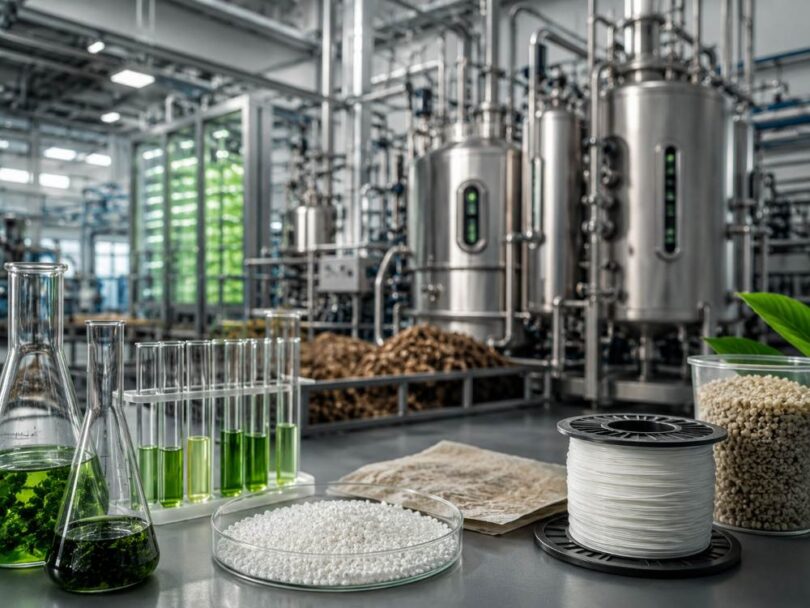
The bioindustrial manufacturing projects focus on using biological systems to produce chemicals, materials, fuels, and industrial products from agricultural feedstocks and waste streams.
Several initiatives aim to improve manufacturing efficiency and reduce production costs through advanced technologies including machine learning, artificial intelligence, and sensor-driven automation.
Projects announced include microbial lithium extraction for biomining, methane-based bioplastics production, protein manufacturing for wound healing and defence applications, and biosensor development for disease detection.
Bioindustrial manufacturing is increasingly viewed as a strategic growth area due to its potential to reduce reliance on fossil-derived materials and strengthen domestic production capacity for critical industrial inputs.
Workforce development and biomanufacturing expansion
Alongside technology development, the bioindustrial manufacturing projects include large-scale workforce and education initiatives designed to support industry growth.
Programmes involve apprenticeship frameworks, university training courses, community college partnerships, and veteran transition support aimed at building a skilled workforce for the expanding bioeconomy sector.
Industrial biotechnology is expected to play an increasing role in future manufacturing systems, particularly in areas such as sustainable chemicals, alternative materials, advanced agriculture, and low-carbon industrial processes.
Researchers and industry participants involved in the programme state that scaling domestic biomanufacturing capacity could help improve supply chain resilience while supporting new manufacturing opportunities in rural and industrial regions.
The projects also reflect growing public and private investment in biological manufacturing systems as countries compete to establish leadership in emerging industrial biotechnology sectors.
Explore more on our Technology & Innovation coverage and Manufacturing & Recycling insights.