

BiofuelAi, a University of Surrey spinout that uses artificial intelligence to help biogas plants produce more renewable energy at lower cost, has won the £1 million Manchester Prize, the UK government’s flagship AI innovation challenge.
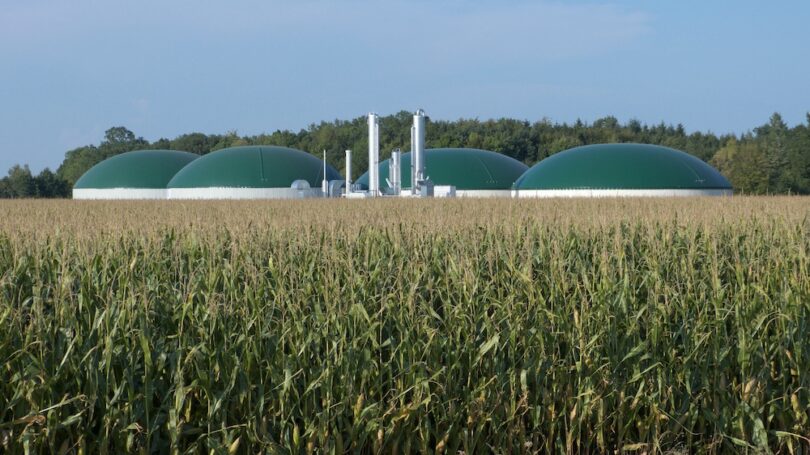
The company has developed an AI-powered decision-support platform for biogas plant operators. Anaerobic digestion, the breakdown of organic material such as agricultural waste, food waste and wastewater to produce biogas, is a slow biological process that has traditionally been managed through operator experience and spreadsheets rather than predictive tools. BiofuelAi’s platform aims to give operators a real-time picture of what is happening inside their digesters and what action will produce the best outcome.
How the platform works
The system combines mechanistic models, machine learning and hybrid approaches to create a “digital twin” of a biogas plant. According to the company, that allows operators to optimise both short-term decisions, such as feeding recipes and storage management, and longer-term ones, including feedstock acquisition and digester health, while accounting for the uncertainty inherent in the biological process.
“Anaerobic digestion is more like brewing than chemistry,” said Professor Michael Short, the company’s chief technology officer and co-founder and a professor of chemical engineering at Surrey. “What goes in takes days or weeks to show up in what comes out, which makes reliable prediction genuinely hard. The Manchester Prize win matters because it says the science is ready to become a product.”
Pilot results and rollout
BiofuelAi said pilot trials had demonstrated revenue increases of 6 to 10% and profit improvements of 7 to 13% per site, alongside a 28% reduction in carbon emissions. The company is onboarding three new sites and has signed a UK reseller agreement. Over five years it projects its platform could deliver more than £500 million in client value, and by 2030 estimates it could mitigate 293,000 tonnes of CO2 equivalent a year across the UK, the equivalent of heating 133,000 homes.
The company is a spinout from Surrey’s AI4AD research project and has attracted more than £1.5 million in research funding. Chief executive and co-founder Alan Beesley said the biogas industry was “one of the least data-driven sectors in energy,” with plants generating heat and power for thousands of homes “still largely managed through spreadsheets and operator experience.”
The Manchester Prize
The Manchester Prize is a challenge prize from the UK’s Department for Science, Innovation and Technology, awarded annually for a decade to UK-led breakthroughs in artificial intelligence for public good. It is delivered by Challenge Works, part of the innovation foundation Nesta. Science Minister Lord Vallance said the technology “could supercharge our mission to power Britain with clean, affordable energy.”
Biogas, produced through anaerobic digestion, is a growing component of the UK’s renewable energy mix. BiofuelAi is based at the Surrey Technology Centre in Guildford.
Frequently asked questions
What is BiofuelAi?
A University of Surrey spinout that has built an AI decision-support platform to help biogas plant operators run anaerobic digestion more efficiently and with lower emissions.
What has it won?
The £1 million Manchester Prize, the UK government’s flagship AI innovation challenge, run by the Department for Science, Innovation and Technology and delivered by Challenge Works.
What results has it shown?
Pilot trials reported revenue up 6 to 10%, profit up 7 to 13% and a 28% cut in carbon emissions per site.
What is the wider impact?
BiofuelAi estimates its platform could cut 293,000 tonnes of CO2 equivalent a year across the UK by 2030, equivalent to heating 133,000 homes.