


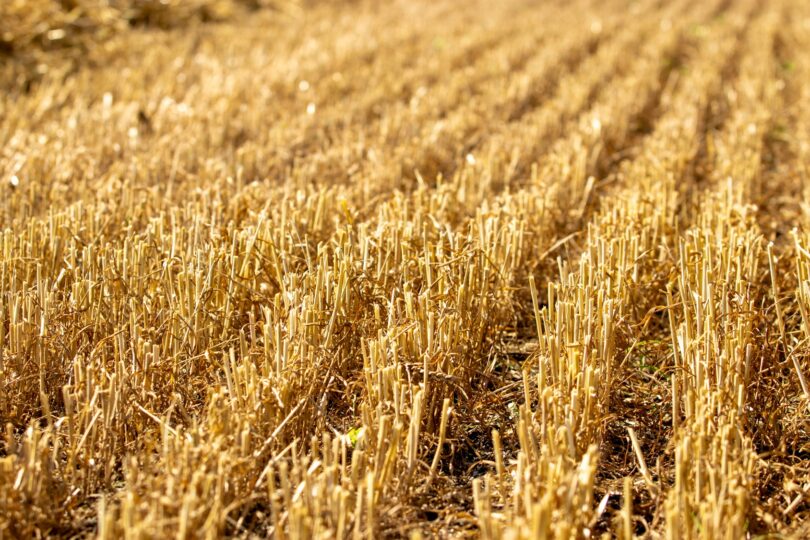
Crop residue removal for bioenergy could come at a cost to biodiversity if too much material is taken from fields, according to research led by the University of Surrey. The study found that cereal-growing areas in Europe where at least 70 per cent of crop residues were left on fields generally had greater local biodiversity than areas where less was retained.
Crop residues are the stems, leaves and husks left behind after cereals such as wheat and maize are harvested. The researchers said they could provide an important source of renewable energy for Europe.
Competing uses for crop residues
Some cereal residues are already used for fuel and bioenergy. However, much of this material is used as animal feed or bedding, or is left on fields, where it helps to maintain healthy soils and provides food and habitats for wildlife.
As Europe looks to increase renewable energy production, the Surrey researchers worked with the Natural History Museum‘s Biodiversity Futures Lab and Utrecht University in the Netherlands. Their aim was to better understand how the amount of crop residue left on fields is linked to local biodiversity.
How the research was carried out
The study, published in the journal Agriculture, Ecosystems and Environment, used statistical models to analyse biodiversity measurements from land uses across Europe, including fields growing cereals. These were combined with data on crop yields, residue management and environmental conditions.
Alongside the 70 per cent threshold finding, the analysis showed that the amount of residue left on fields was a stronger predictor of biodiversity than crop yields. The researchers said this highlighted the importance of how these materials are managed.
Professor Zoe M Harris, Director of the Centre for Environment and Sustainability at the University of Surrey, said: “Crop residues could provide a valuable source of renewable energy for Europe’s green transition, but as with any natural resource, we need to fully understand what happens if we take more of these materials from fields. Our findings suggest that there could indeed be consequences for biodiversity, and that needs to be factored in when assessing how much crop residue can sustainably be used for bioenergy production.”
Crop residue removal and alternative sources for bioenergy
The study warns that increasing the removal of cereal residues could have negative consequences for biodiversity, particularly in areas where a high proportion is currently left on fields. It also identifies an alternative: making more residues available for bioenergy by reducing the amount used for animal feed and bedding, rather than removing more from fields.
Lead author Dr Sophie Tudge carried out the research during her PhD at Surrey and is now a postdoctoral researcher at the University of Leeds. She said: “It’s not just about finding enough material to produce renewable energy, but working out where that material should come from. Rather than removing more crop residues from fields, we should also be looking at how they’re used elsewhere, including in animal production. There may be opportunities to make more of this material available for bioenergy without putting additional pressure on farmland and the wildlife it supports.”
Wider challenges for sustainable bioenergy
The study also points to wider challenges in producing sustainable bioenergy, including the need to protect natural habitats from agricultural expansion. The researchers said further work on how removing crop residues directly affects biodiversity could help Europe balance its renewable energy ambitions with the protection of its ecosystems.
Climate Global News has previously reported on other University of Surrey research into balancing food production, land use and renewable energy, which found that vertical farming could cut emissions if spared land is used for solar power.
Frequently asked questions
What are crop residues?
Crop residues are the stems, leaves and husks left behind after harvesting cereals such as wheat and maize. They are used for fuel and bioenergy, as animal feed or bedding, or left on fields to maintain soils and support wildlife.
How does removing crop residues affect biodiversity?
The University of Surrey-led study found that cereal-growing areas where at least 70 per cent of crop residues were left on fields generally had greater local biodiversity than areas where less was retained. It warns that increasing removal could have negative consequences for biodiversity.
Is crop yield or residue management a better predictor of biodiversity?
The study found that the amount of residue left on fields was a stronger predictor of biodiversity than crop yields.
How could more crop residues be used for bioenergy without harming wildlife?
The researchers suggest making more residues available for bioenergy by reducing the amount used for animal feed and bedding, rather than removing more from fields.
Who carried out the crop residue and biodiversity study?
The research was led by the University of Surrey with the Natural History Museum’s Biodiversity Futures Lab and Utrecht University. It was published in Agriculture, Ecosystems and Environment, with Dr Sophie Tudge as lead author.