

Hottinger Brüel & Kjær has launched HBK Monitor360, an AI-enabled monitoring platform for critical infrastructure and industrial assets.
The platform is designed to turn sensor data into operational insight for asset owners managing data centres, semiconductor manufacturing sites, power generation facilities, bridges and rail networks.
HBK said the system combines high-fidelity sensor data, edge computing and AI-supported analytics to support continuous condition monitoring and predictive maintenance.
HBK Monitor360 supports critical asset monitoring
As AI infrastructure expands, operators are under growing pressure to reduce unplanned downtime and improve asset reliability.
Data centres and semiconductor manufacturing facilities are especially sensitive to disruption, where outages can create significant financial and operational risk.
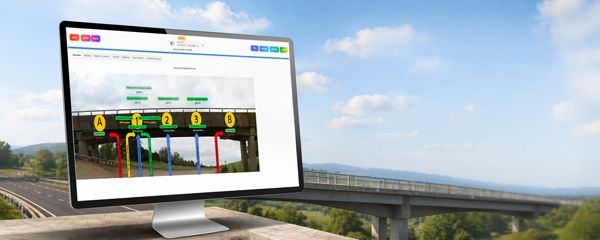
HBK Monitor360 is designed to move beyond periodic inspections by providing live dashboards with historical context. This allows current signals to be compared with long-term operating baselines, helping teams detect early anomalies.
Physics-informed AI underpins the platform
The company said the platform uses a physics-informed AI approach, combining analytics with engineering knowledge rather than relying only on black-box machine learning.
HBK Monitor360 integrates multi-sensor data, including strain, vibration, temperature and displacement. The system is designed to learn normal asset behaviour and identify changes that may indicate a developing issue.
The real value in Structural Health Monitoring doesn’t just come from visualising huge volumes of data. It comes from traceable, physics-informed workflows that convert imperfect field data into reliable, reviewable, and actionable engineering evidence, ultimately empowering asset managers to make data-driven decisions that extend asset life and reduce operational risk.
Guga Gugaratshan, director, software/digital growth, HBK
Predictive maintenance for data centres and infrastructure
Continuous monitoring can help operators shift from scheduled inspection towards condition-based maintenance. This can reduce unnecessary interventions while improving the chances of identifying faults before they cause disruption.
For data centre operators, that may mean closer visibility of structural and mechanical conditions across high-value facilities. For infrastructure owners, it can support more informed decisions on bridges, rail assets and power generation sites.
HBK said the platform is designed to integrate with existing operational technology and asset management systems. This is intended to support phased digital transformation and reduce the risk of vendor lock-in.
Critical infrastructure focus grows
The launch reflects a wider shift towards more connected infrastructure monitoring as asset owners respond to ageing systems, climate-related stress and rising performance demands.
For Climate Global News readers, the relevance sits in resilience. Better monitoring can help operators extend asset life, reduce emergency maintenance and support safer operation of infrastructure that underpins clean energy, transport and digital systems.
More coverage of climate-related infrastructure and industrial technology is available in the Technology & Innovation section, including recent reporting on infrastructure resilience and corrosion risk.
FAQs
What is HBK Monitor360?
HBK Monitor360 is an AI-enabled monitoring platform that uses sensor data to support condition monitoring and predictive maintenance for critical assets.
What does physics-informed AI mean?
Physics-informed AI combines machine learning with engineering principles, helping analytics reflect how physical assets behave in real operating conditions.
Which assets can HBK Monitor360 monitor?
HBK says the platform can support data centres, semiconductor manufacturing facilities, power generation assets, bridges and rail infrastructure.
Why is continuous condition monitoring important?
Continuous condition monitoring helps operators detect early changes in asset behaviour, reduce unplanned downtime and plan maintenance based on evidence.