

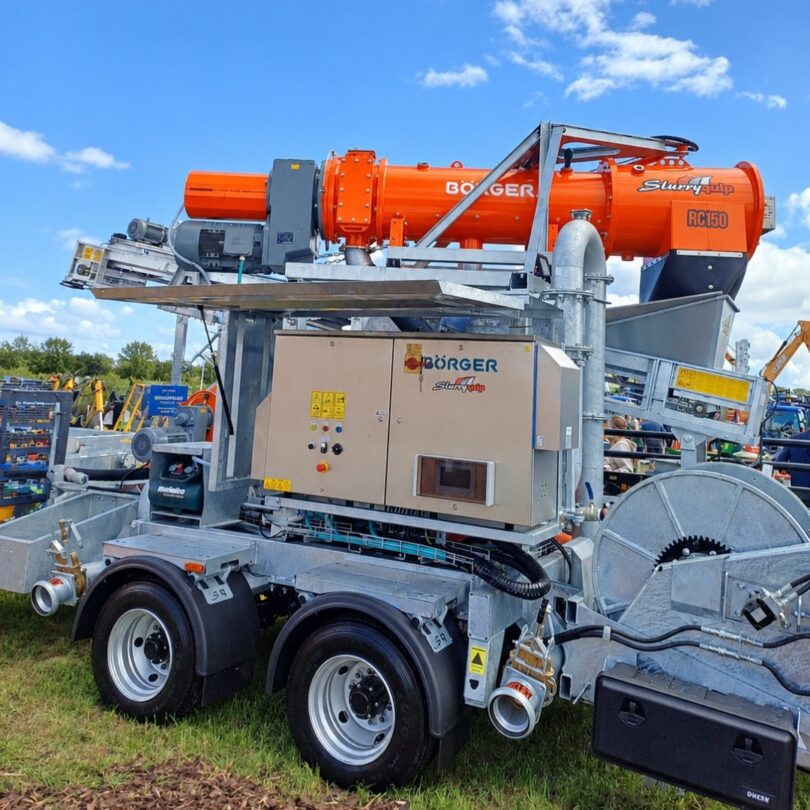
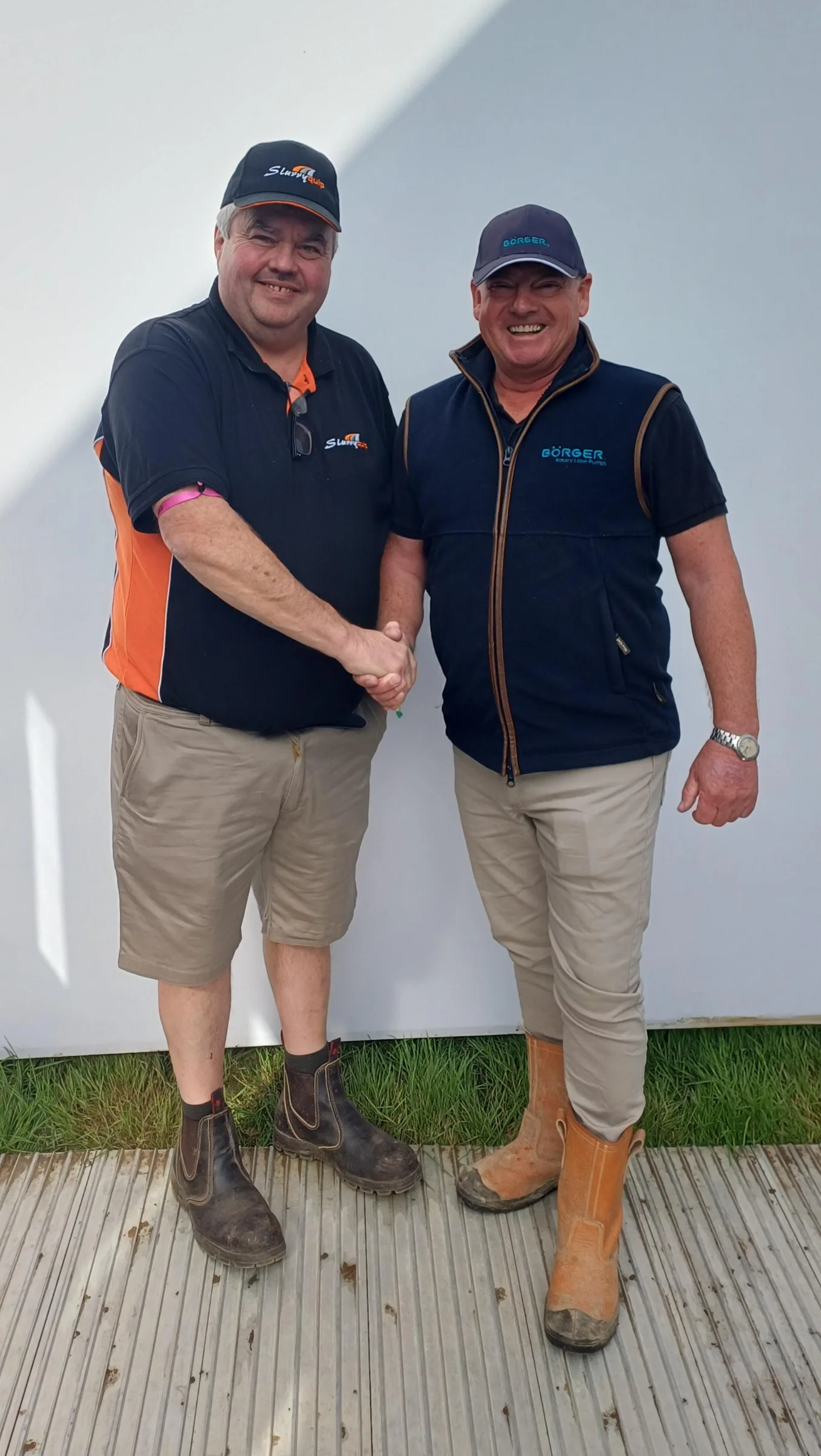
Slurryquip has sold more than 50 mobile and static slurry separators built around equipment from Borger in the three years since the two companies began working together. The company announced the figure after completing the latest sale of its RC150 Mobile Separator, a mobile slurry separator, following its appearance at the National Ploughing Championships in Ireland.
The separators have gone to farmers, contractors and anaerobic digestion (AD) operators across Ireland, Scotland, England and Wales. Slurryquip describes the RC150 unit as the largest single-unit separator on the market.
Mobile slurry separator designed for multiple sites
The Slurryquip mobile unit features the Borger RC150 Separator and is designed for slurry operations where equipment needs to move between multiple locations. According to Slurryquip, it can process up to 150 cubic metres of slurry per hour.
The separators are offered as static, skid-frame or trailer-mounted units, and each can be customised to the specific needs of an operation, the company said.
Trials of a smaller unit led to the RC150
Richard Fitzpatrick, Slurryquip’s founder, said the company first tested a smaller Borger machine before developing the larger model. “I knew there was a demand for mobile separation, because it is so efficient and cost-effective for farmers. We first trialled a smaller unit from Borger, and it all stacked up with very good test results. This gave us the confidence to also develop the much bigger unit, which can process up to 150 cubic meters of slurry per hour.”
Fitzpatrick, who the company said was the first to develop and manufacture umbilical systems in Ireland, said the Borger equipment suited Slurryquip’s approach to product development. “The Borger Separators, especially the mobile units, fit in perfectly with us always wanting to be at the forefront of providing novel and better products that will benefit farmers. We strive to lessen the cost per cubic metre for spreading, and we have our own lab to carry out analysis and show meaningful results.”
Repeat orders and spare parts
David Brown, Managing Director of Borger UK, said the partnership was generating repeat business. “With Slurryquip’s innovation and knowledge, the demand for our separators is phenomenal. We’re now seeing repeat orders, including for the big RC150 Mobile Separator, which gives farmers the option of just one unit to carry out their entire slurry separation process.”
Fitzpatrick said demand for replacement components had so far been limited, which he attributed to the durability of the equipment. “Three years in, and only now are we beginning to see the need for spare parts from Borger, which conclusively proves just how robust and reliable the equipment is! We provide full back up, all the way, with spare parts readily available.”
Grit removal and nutrient capture for AD operators
Beyond farms, Slurryquip said the separators are also used by AD operators, both to remove grit from digesters and to manage the nutrients contained in slurry.
“As well as farms,” added Richard, “AD operators love the fact that they can easily remove unwanted grit from their digesters to make them far more efficient. They also see the significant benefits of capturing and controlling the important nutrients for better crop growth.”
Frequently asked questions
How many separators have Slurryquip and Borger sold?
Slurryquip has sold more than 50 mobile and static separators using Borger equipment since the two companies began working together three years ago.
What is the Slurryquip RC150 Mobile Separator?
It is a mobile unit featuring the Borger RC150 Separator, designed for slurry operations that need to move between multiple locations. Slurryquip describes it as the largest single-unit separator on the market.
How much slurry can the RC150 Mobile Separator process?
According to Slurryquip founder Richard Fitzpatrick, the unit can process up to 150 cubic metres of slurry per hour.
Where have the Slurryquip and Borger separators been sold?
They have been sold to farmers, contractors and AD operators across Ireland, Scotland, England and Wales.
What configurations are the separators available in?
The separators are available as static, skid-frame or trailer-mounted units, and can be customised to the specific needs of an operation.