


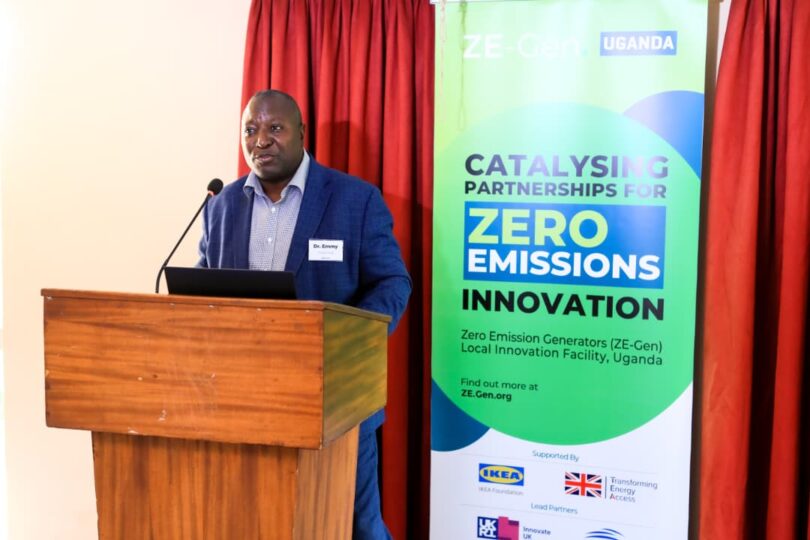
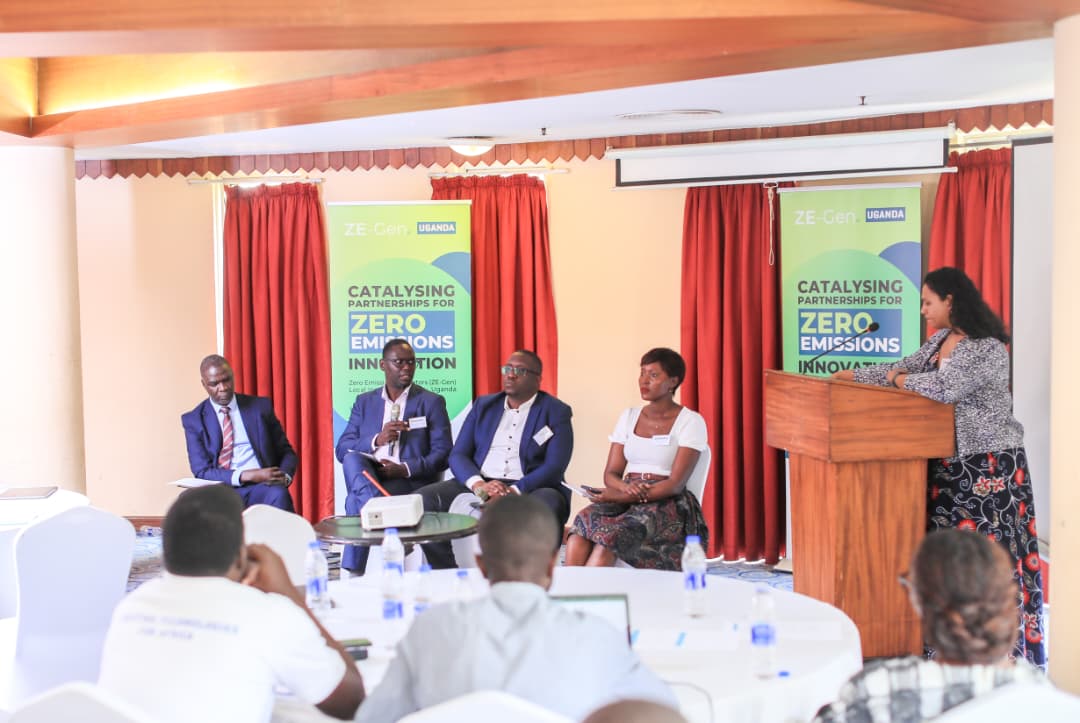
Ugandan clean-energy businesses developing affordable alternatives to petrol and diesel generators have met financiers, investors and market partners in Kampala at an event run by ZE-Gen, a programme delivered by the Carbon Trust and Innovate UK. The ZE-Gen Market Engagement Event brought together more than 20 businesses, finance providers, government and development partners to explore customer finance, working capital, investor readiness, operational scaling and routes to market.
ZE-Gen is supported by the IKEA Foundation and Transforming Energy Access, a UK Government-funded research and innovation platform under the Ayrton Fund. It forms part of the wider GRTD clean-energy portfolio.
Four businesses testing finance models
The event focused on four businesses supported through ZE-Gen’s Local Innovation Facility: Innovex Uganda, NOA Energy Services Uganda, Wana Energy Solutions and BrightLife/FINCA Uganda. They are testing approaches including PAYGo and rent-to-own finance, subscription-based energy-as-a-service, battery rental, buy-now-pay-later and microfinance-led distribution.
The Uganda portfolio is targeting 746 installed systems with 1,081 kW of renewable-energy capacity. It is backed by €600,000 in grants, with €1.2 million in total project costs and an anticipated €1.6 million in private-sector leverage.
The businesses work across Greater Kampala, Central and Western Uganda, Northern Uganda and the West Nile region. Their solutions serve homes, micro, small and medium-sized enterprises, marketplaces and humanitarian settlements.
Why Ugandan clean-energy businesses need finance
Uganda has substantial renewable-generation potential, but weak distribution infrastructure, high tariffs and limited rural access continue to drive demand for petrol and diesel generators as backup or primary power. The shift to cleaner alternatives is also constrained by high upfront system costs, limited affordable finance for clean-energy companies and inflexible payment options for customers.
A recent study of 280 solar-generator customers in Uganda, interviewed in August and September 2026, found that 63% used their systems for income-generating activities. Among these users, 83% reported higher income because of their solar generator. Across the full sample, 81% said their quality of life had improved, and 99% were accessing a solar generator for the first time.
However, 38% of customers answering the repayment question described their payments as a burden. The study was based on telephone interviews with customers of two solar-generator suppliers and is not an evaluation of the four businesses featured at the event.
James Robinson, ZE-Gen Manager at the Carbon Trust, said: “These businesses are combining renewable-energy technology with financing and service models designed around the realities of Ugandan customers.”
Partnerships discussed in Kampala
The four businesses presented their models and implementation progress, met finance and market stakeholders and worked on partnership action plans. Priority opportunities included integrating Innovex’s PAYGo software with NOA and Wana Energy customer-payment models, exploring end-user and working-capital finance with BrightLife/FINCA, and strengthening collaboration between NOA and Wana Energy in the West Nile region.
Innovex and Wana Energy Solutions agreed to take forward talks on integrating Innovex’s Remot IoT and PAYGo platform into Wana’s battery-swap and rental service in West Nile, to track battery charge, use and location. Finance partners including the Uganda Energy Credit Capitalisation Company (UECCC) and BRAC Uganda Bank set out routes to concessional credit, partial credit guarantees and collateral-free end-user loans.
Dr Emmy Wasira, CEO and Co-founder of Wana Energy Solutions, said: “We have served more than 150,000 customers since 2008, and in West Nile we see that people who may not be bankable still have income and real energy needs.”
Working capital remains the main barrier
Jimmy Ojiro, Senior Transaction Specialist at UECCC, said: “Through our results-based financing programme, companies have paid out around UGX 180 billion in subsidies in 18 months, so the demand is real. The barrier now is working capital: banks still see this sector as risky.” He added: “We are de-risking it with concessional lines of credit at 5%, partial credit guarantees and technology risk guarantees.”
Sumaya Mahomed, Director of Wekeza Energy, ZE-Gen’s Local Innovation Facility delivery partner in Uganda, said: “Results-based financing is helping, but on its own it doesn’t solve the working-capital gap. Companies still need debt and equity, and customers need finance they can actually afford.”
Alexander Komakech Akena, Country Coordinator at the Beyond the Grid Fund for Africa (BGFA), said: “We use results-based financing as a market-building tool, not simply a subsidy.” He added that “Banks still have a very clear role to play.”
Wider programme and next event in Lagos
The Local Innovation Facility is supporting 11 locally led businesses across Uganda and Nigeria, testing six to seven business models covering more than 2,000 systems and around 3 MW of installed capacity. ZE-Gen, which was launched at COP27, said it has mobilised £57 million, works across 29 countries and aims to unlock £100 million of funding.
A ZE-Gen investor and market engagement event will follow in Lagos, Nigeria, later in November, bringing Nigerian clean-energy businesses together with investors, financiers and commercial partners.
Frequently asked questions
What was the ZE-Gen Market Engagement Event in Kampala?
It was an event that brought together more than 20 businesses, finance providers, government and development partners to explore customer finance, working capital, investor readiness, operational scaling and routes to market for alternatives to petrol and diesel generators.
Which Ugandan businesses were featured at the event?
The event focused on Innovex Uganda, NOA Energy Services Uganda, Wana Energy Solutions and BrightLife/FINCA Uganda, all supported through ZE-Gen’s Local Innovation Facility.
How much renewable capacity is the ZE-Gen Uganda portfolio targeting?
The Uganda portfolio is targeting 746 installed systems with 1,081 kW of renewable-energy capacity. It is backed by €600,000 in grants, with €1.2 million in total project costs and an anticipated €1.6 million in private-sector leverage.
What did the study of Ugandan solar-generator customers find?
Of 280 customers interviewed, 63% used their systems for income-generating activities, and 83% of those reported higher income. However, 38% of those answering the repayment question described their payments as a burden.
Who delivers and funds ZE-Gen?
ZE-Gen is delivered by the Carbon Trust and Innovate UK and supported by the IKEA Foundation and Transforming Energy Access, a UK Government-funded platform under the Ayrton Fund.