


Abstract
Carbon pricing and emissions metrics have reshaped how financial markets assess environmental risk, influencing capital allocation, lending conditions and

Dr Annaëlle Hip Kam, Sustainability Scientist
Tunley Environmental
corporate strategy. Yet, this climate metric alone does not capture the full environmental spectrum of environmental risk embedded in today’s portfolios. While carbon markets have succeeded because emissions are uniform and tradable, this same logic obscures material risks linked to nature loss. By examining how financial activity both depends on and contributes to ecosystem degradation, this paper shows that nature-related risk is endogenous to finance and partially non-diversifiable. Moving beyond carbon is therefore not a disclosure exercise, but a necessary evolution in financial risk analysis to safeguard long-term value and financial stability.
The limits of a carbon-centred lens
Over the past decade, carbon has become the dominant lens through which environmental risk is assessed in financial decision-making. Emissions targets, transition plans and net-zero commitments now influence capital allocation, lending conditions and corporate strategy (World Bank, 2025). This shift has been consequential, reframing climate change from an ethical concern into a financially material risk.
Carbon pricing shows how effectively finance can respond when a risk is clearly defined and monetised. More than 60 countries have implemented carbon pricing schemes under their Paris Agreement commitments. In mature markets, carbon credits, such as EU Allowances, trade across regulated spot and derivatives markets (The Renewable Energy Institute, 2025). Carbon pricing revenues exceeded US$100 billion in 2024, with 80 pricing instruments now in operation globally, covering about 28% of global greenhouse gas emissions in economies and representing nearly two thirds of global GDP, including about half of emissions from power and industrial sectors (World Bank, 2025).
This reflects real progress. Carbon pricing works well because carbon is globally comparable. A tonne of emissions has the same climatic effect regardless of where it is released, making it suitable for standardisation, and trading. However, this success also exposes a limitation. Nature-related risk is multi-dimensional, location-specific and threshold-driven. The degradation of a watershed, soil system or habitat cannot be captured by a single, tradable unit. As a result, the same asset/ metric may be resilient in one geography and fragile in another because the binding constraint is not emissions, but water scarcity, soil degradation, regulatory pressure or ecosystem collapse.
“Beyond carbon” therefore means shifting from measuring a single environmental output to assessing nature as productive capital: the natural system that underpin economic activity. The point is not that carbon tools are flawed, but that their simplicity can create blind spots for broader environmental risk.
Nature as an economic input
Economic activity does not operate alongside nature, it is embedded in natural systems. Businesses depend on ecosystem services, such as water supply, soil fertility, pollination climate moderation. These services flow from natural capital, defined as the stock of natural assets including soils, biodiversity, freshwater and ecosystems. Their financial exposure arises through an impact–dependency relationship (Dasgupta, 2021). Dependencies describe how production relies on ecosystem services, while impacts capture how business activities degrade or restore natural capital across operations and value chains (Taskforce on Nature-related Financial Disclosures, 2023).
Impacts are not evenly distributed. Four value chains (food, infrastructure, fashion, and energy) account for roughly 90% of man-made impacts on biodiversity (Kurth, 2021). Dependencies, however, are pervasive. The World Economic Forum estimates about US$44 trillion of global economic value generation is moderately or highly dependent on nature (World Economic Forum, 2023). Meanwhile, UNDP estimates a nature-positive transition could unlock US$10.1 trillion in annual business value and create 395 million jobs by 2030, particularly in sectors driving most nature loss (UNDP, 2023).
Ecosystems, therefore, function as productive assets. Yet neither the risks of degradation nor the opportunities of restoration are reflected in financial analysis.
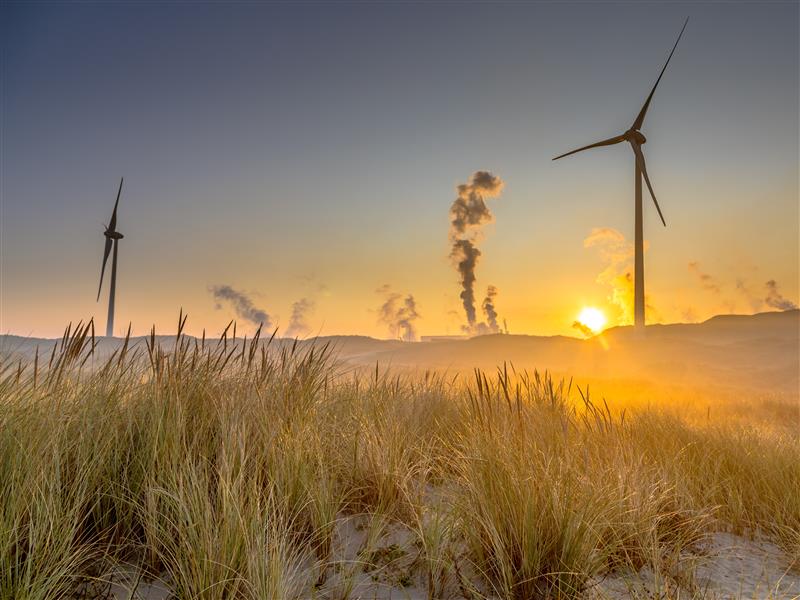
Environmental risk analysis increasingly needs to consider both climate and nature-related dependencies.
Nature risk is already embedded in portfolios
Nature loss is often described as an external shock. This framing is incomplete. A significant share of nature risk is endogenous to financial decision-making. (Dasgupta, 2021) (United Nations Environment Programme (UNEP), 2026). When financial flows prioritise short term returns or volume growth in high-impact sectors, they can accelerate natural capital depletion, and later inherit the resulting instability as credit risk, insurance losses and asset impairment. In this sense, finance is not exposed to nature loss; in many cases it contributes to it.
This helps explain why nature risk can remain persistently mispriced even when “data exists”. Financial activity can tighten ecological constraints while treating them as distant. When those constraints bind, repricing tends to be sudden rather than gradual (Bolton, Despres, PEREIRA DA SILVA , Samama, & Svartzman, 20220).
Portfolio evidence confirms that nature exposure is already material. At least 10% of the UK’s bond, equity, and loan portfolio is highly or very highly dependent on nature, while £2.5 trillion, representing 44% of upstream financial exposures, is linked to sectors with high nature dependency and rapid natural capital depletion (Evison, Low, & O’Brien, 2023). This matters because nature risk challenges a core assumption of portfolio construction: diversification. Nature-related shocks often affect co-related assets simultaneously through shared water supply, supply chains, and ecological thresholds. Water scarcity, soil degradation, and biodiversity collapse do not respect sector labels in a portfolio. They propagate across regions and industries, creating a form of systemic, partially non-diversifiable exposure (Bolton et al., 2020).
The financing imbalance reinforces this vulnerability. UNEP estimates that while US$220 billion flows annually into nature-based solutions, US$7.3 trillion flows into nature-negative activities, including US$2.4 trillion in harmful subsidies. For every US$1 invested in protecting nature, US$30 is spent driving its degradation (UNEP, 2026).
How Nature Loss Becomes Financial Risk
TNFD classifies nature-related risks as physical, transition, and systemic (TNFD, 2023). Systemic risks warrant particular attention, as ecosystems can shift abruptly, triggering cascading economic impacts (Bolton et al., 2020).
The financial impacts are already visible:
- Water shortages reduced Indian thermal power generation by more than US$1.4 billion between 2013 and 2016 (Dasgupta, 2021).
- Wetlands reduced flood damages during Hurricane Sandy by over US$625 million (Narayan, et al., 2017).
- Bayer lost nearly 40% of its market capitalisation following the acquisition of an agrochemical business linked to pollinator harm (Dasgupta, 2021).
Measurement as financial Due Diligence
Climate risk entered finance because emissions could be translated into comparable metrics (TCFD, 2017). Nature cannot be reduced to a single number, but it is not unmeasurable. Frameworks, such as TNFD, tools such as ENCORE, and UNEP-WCMC’s Nature Risk Profiles, allow the identification of dependencies, impacts and geographic concentration of risk.
Measurement helps identify concentrated exposure, correlated risk and feedback loops where finance both drives and inherits ecosystem degradation. Emissions data alone cannot reveal exposure to water stress, soil degradation or biodiversity loss. Treating carbon as a proxy for all environmental risk creates blind spots and can delay repricing until it becomes disruptive.
Conclusion: Beyond Carbon as Analytical Maturity
Carbon pricing demonstrates what finance can achieve when risks are uniform and readily monetisable. It has now mobilised over US$100 billion annually and covering 28% of global emissions (World Bank, 2025). Nature-related risk constitutes a different challenge: location-specific, multi-factor and increasingly systemic, yet already measurable enough to influence portfolio-level decisions.
Moving beyond carbon does not mean replacing climate analysis. It means recognising that long-term financial value depends on the condition of natural systems, and that finance is not merely exposed to their decline but often implicated in it. Addressing nature-related dependencies and impacts is therefore an essential step in the maturation of financial risk analysis.
References
Bolton, P., Despres, M., PEREIRA DA SILVA , L., Samama, F., & Svartzman, R. (20220). Central banking and financial stability. Bank for International Settlements.
Dasgupta, P. (2021). The Economics of Biodiversity: The Dasgupta Review. London: HM Treasury.
Evison, W., Low, L. P., & O’Brien, D. (2023). Managing nature risks: From understanding to action. PWC. From PWC: https://www.pwc.co.uk/press-room/press-releases/corporate-news/more-than-half-of-global-gdp-is-exposed-to-material-nature-risk-.html
Kurth, T. W. (2021, March). The Biodiversity Crisis Is a Business Crisis. Boston Consulting Group.
Narayan, S., Beck, M. W., Wilson, P., Thomas, C. J., Guerrero, A., Shepard, C. C., . . . Trespalacios, D. (2017). The Value of Coastal Wetlands for Flood Damage Reduction in the Northeastern USA. Scientific Reports(7), 9463. doi:https://doi.org/10.1038/s41598-017-09269-z
Taskforce on Nature-related Financial Disclosures. (2023). Recommendations for nature-related risk management and disclosure. TNFD.
The Renewable Energy Institute. (2025). Carbon Finance Explained: Everything You Should Know. From The Renewable Energy Institute: https://www.renewableinstitute.org/carbon-finance-explained-everything-you-should-know/
United Nations Environment Programme (UNEP). (2026). State of finance for nature 2026. UNEP.
World Bank. (2025, June 10). Global Carbon Pricing Mobilizes Over $100 Billion for Public Budgets. From Netherlands for the World Bank: https://nl4worldbank.org/2025/06/23/global-carbon-pricing-mobilizes-over-100-billion-for-public-budgets/?utm_source=chatgpt.com
World Bank. (2025). State and trends of carbon pricing 2025. World Bank Group.
World Economic Forum. (2023, February 27). Why measuring the economic value of ecosystems is important. From World Economic Forum: https://www.weforum.org/stories/2023/02/an-ecosystems-economic-value-can-now-be-measured-heres-how/#:~:text=Nature%20is%20free%2C%20yet%20its,Economic%20Forum%20doing%20about%20nature?