

The Indicators of Global Climate Change initiative has launched new resources to help policymakers and wider audiences understand accelerating climate risks.
The resources include Reading the Climate Pulse, a new animation narrated by environmental journalist Lucy Siegle, and a companion guide for policymakers. Both explain findings from the latest IGCC report, including record Earth’s Energy Imbalance and human-caused warming reaching 1.37C.
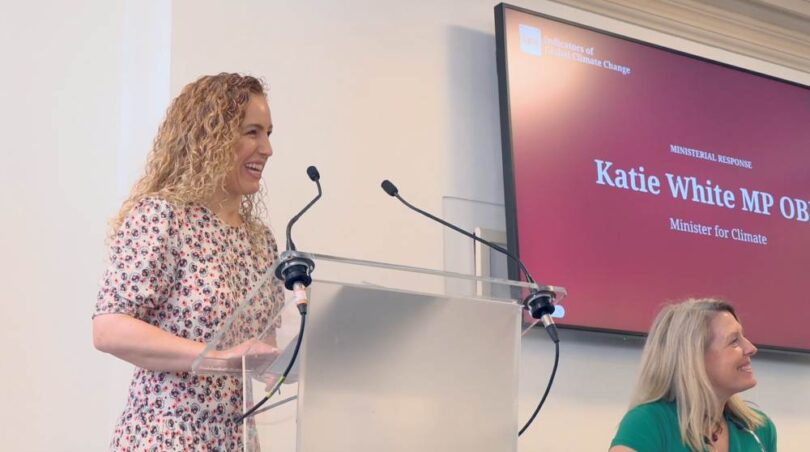
The resources were unveiled at a Westminster event featuring UK Climate Minister Katie White MP, Baroness Bryony Worthington and Professor Piers Forster CBE, lead author of the IGCC report.
Earth’s Energy Imbalance reaches record high
The IGCC provides annual updates of key climate indicators using methods aligned with the Intergovernmental Panel on Climate Change’s Sixth Assessment Report. The latest report was produced by an international team of more than 70 scientists from 56 institutions across 17 countries.
The new animation and guide focus strongly on Earth’s Energy Imbalance, a measure of how much extra heat the planet is retaining. According to the latest IGCC findings, the indicator has more than doubled over the past two decades and reached a record high in 2025.
The increase is linked to rising greenhouse gas concentrations and a reduction in the cooling effect of atmospheric aerosols.
“During COVID we all came to understand the R number, the infection rate, and why it had to come down. The Earth’s Energy Imbalance is the climate’s R number, and right now it is going in the wrong direction,” said Baroness Bryony Worthington, Chair of London Climate Action Week.
“These resources bring that reality to life in a way that everyone can grasp.”
Animation links climate data to visible impacts
The Reading the Climate Pulse animation uses visual storytelling to explain the drivers and consequences of Earth’s growing energy imbalance, including impacts on oceans, coasts and communities.
The film connects the indicator to climate consequences including coral bleaching, intensifying drought and marine heatwaves.
“A key indicator is the Earth’s Energy Imbalance, which measures how fast heat is accumulating in the climate system,” said Professor Piers Forster, Director of the Priestley Centre for Climate Futures at the University of Leeds and IGCC lead author.
“Without human influence, it should be close to zero, but it has been growing since the 1970s and is now at a record high, doubling in recent decades.”
The animation is narrated by Lucy Siegle, who marks 20 years of bringing climate and nature stories to mainstream UK audiences.
“The science in this report is a wake-up call. We know what is happening to our planet, we know why, and we know what is at stake,” Siegle said.
Policy guide highlights monitoring and adaptation
The policymakers’ guide provides analysis of the indicators and their implications for climate policy. It highlights the importance of protecting climate monitoring systems and preparing for faster near-term warming as air pollution falls and its cooling effect declines.
Key findings include human-caused warming reaching 1.37C in 2025, greenhouse gas emissions reaching record levels in 2024, marine heatwave days more than tripling globally since 1991, and global sea level reaching 23cm above 1901 levels in 2025.
From 2026, IGCC production is contracted by the European Centre for Medium-Range Weather Forecasts and the Copernicus Climate Change Service, implemented on behalf of the European Commission.
The IGCC platform is available at indicators.climate.copernicus.eu, with the full press pack available via Google Drive.
Read more climate science coverage in Climate Global News’ Health & Science and Earth & Nature sections.
FAQs
What is Earth’s Energy Imbalance?
Earth’s Energy Imbalance is the difference between the energy Earth receives from the sun and the energy it radiates back into space. A positive imbalance means the planet is retaining extra heat.
What is the IGCC?
The Indicators of Global Climate Change initiative provides annual updates of key climate indicators using methods aligned with the IPCC Sixth Assessment Report.
What is Reading the Climate Pulse?
Reading the Climate Pulse is a new animation narrated by Lucy Siegle that explains key findings from the latest IGCC report.
Why does the report matter for policymakers?
The report provides updated evidence on human-caused warming, greenhouse gas emissions, Earth’s Energy Imbalance, sea level rise and marine heatwaves, helping policymakers understand current climate risk.