


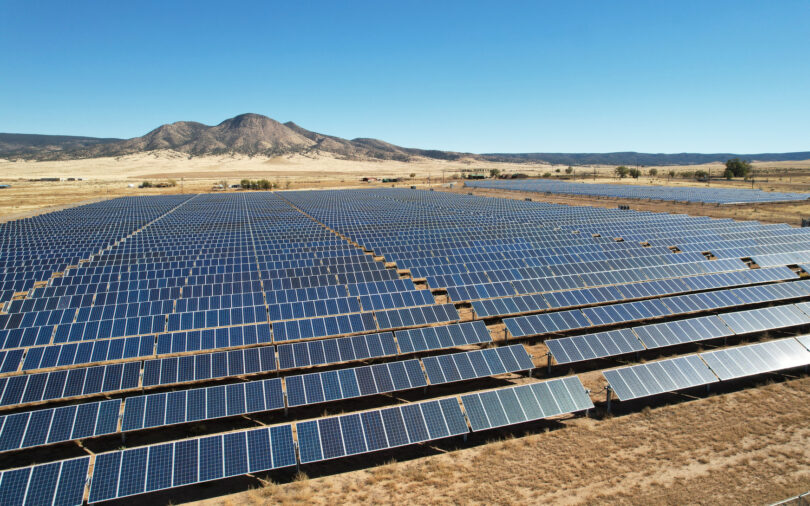
Uzbekistan’s Minister of Energy, Sherzod Khodjaev, has called on American companies to invest in the country’s clean power sector. In an opinion article setting out the case for Uzbekistan renewable energy investment, the head of the Ministry of Energy of Uzbekistan said renewable capacity has reached 11.1 gigawatts. Clean energy, including hydropower, now accounts for roughly 30 per cent of generation.
The article was distributed by communications firm KARV on behalf of the Republic of Uzbekistan.
Investor incentives and early Gulf and Chinese backers
Khodjaev linked the sector’s growth to the economic liberalisation programme launched nearly a decade ago. He said the government guaranteed state-backed power purchase agreements of up to 25 years and restored currency convertibility. It also created a regulatory sandbox that lets foreign financial firms operate under adapted rules while the country’s capital markets framework is finalised.
According to the minister, Saudi Arabia’s ACWA Power, the UAE’s Masdar and Qatar’s Nebras Power were early, large-scale investors. Chinese firms followed, financing wind, storage and hydrogen projects across the country.
US companies enter the market
Khodjaev pointed to a 2-gigawatt electrolyser deal between NASDAQ-listed hydrogen company Plug Power and Allied Green in Uzbekistan. He described it as a commitment to the country’s clean hydrogen ambitions.
He also highlighted the second meeting of the American-Uzbek Business and Investment Council in Samarkand last October. The council is co-chaired by Saida Mirziyoyeva and headed by Komil Allamjonov. US Secretary of State Marco Rubio attended with a delegation of over 200 American business leaders, which the minister described as a record number.
American and Uzbek partners announced 54 new agreements worth nearly $12 billion at the meeting. Khodjaev said bilateral trade is up 35 per cent since the start of the year.
Nuclear, grid upgrades and critical minerals
According to the article, Rubio told the council that Washington has proposed introducing American small modular reactors in Uzbekistan. The proposal would be paired with modernising the country’s electricity grid and gas distribution network to keep pace with rising demand.
On critical minerals, American firms including ReElement Technologies, Traxys and Trafigura agreed to partner with Uzbekistan on exploration, processing technology and mineral supply. The Colorado School of Mines is helping to build local technical capacity.
Uzbekistan renewable energy targets for 2030
The minister said domestic gas reserves are steadily declining as the population grows and urbanises. In response, the government aims to produce over 50 per cent of electricity from renewables by 2030.
The target is backed by nearly $35 billion in recent energy-sector investment, Khodjaev said. This includes solar arrays, a 3,000 megawatt wind farm in Karakalpakstan, and new battery storage systems in Tashkent and Bukhara.
Uzbekistan also plans to export clean electricity to Europe by 2030 through the planned Trans-Caspian Green Energy Corridor. Khodjaev said the shift from attracting capital to becoming an energy supplier shows how far the country has changed.
The pitch to American investors
Khodjaev argued that a country seeking to become an energy exporter is a more interesting proposition for investors focused on critical minerals, supply-chain diversification and energy security. He said this aligns with Washington’s stated priority of reducing reliance on a handful of dominant suppliers.
He added that major sovereign investors have already tested the market and that credit rating agencies have rewarded it with upgrades. In his view, American companies entering now “aren’t chasing a trend”. He said the market is still being priced like a frontier economy even as it becomes more integrated with the global economy.
Frequently asked questions
How much renewable energy capacity does Uzbekistan have?
According to Uzbekistan’s Minister of Energy, Sherzod Khodjaev, the country’s renewable capacity has reached 11.1 gigawatts. Clean energy, including hydropower, provides roughly 30 per cent of generation.
What is Uzbekistan’s renewable energy target for 2030?
The government aims to produce over 50 per cent of electricity from renewables by 2030. The minister said this is backed by nearly $35 billion in recent energy-sector investment.
What deals came out of the American-Uzbek Business and Investment Council meeting in Samarkand?
American and Uzbek partners announced 54 new agreements worth nearly $12 billion at the council’s second meeting in October. US Secretary of State Marco Rubio attended with over 200 American business leaders.
What is the Trans-Caspian Green Energy Corridor?
It is a planned route through which Uzbekistan aims to export clean electricity to Europe by 2030, according to the minister.
Which US companies are investing in Uzbekistan’s energy and minerals sectors?
Plug Power signed a 2-gigawatt electrolyser deal with Allied Green in Uzbekistan. ReElement Technologies, Traxys and Trafigura agreed to partner with the country on critical minerals.