


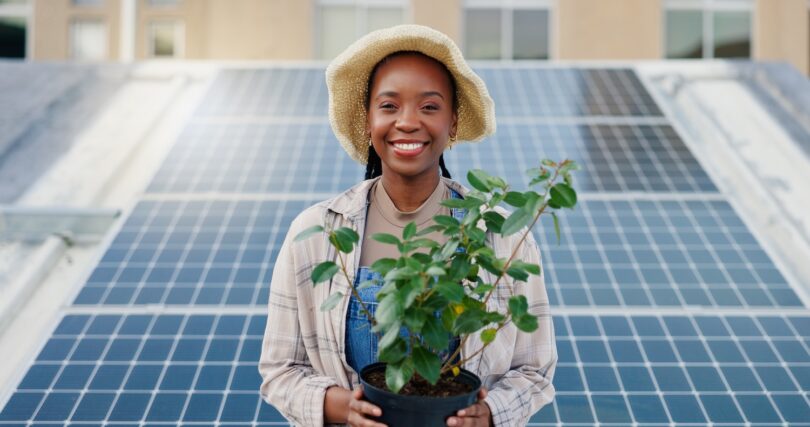
Solar adoption in Nigeria and Kenya is the focus of three new campaigns testing how better information, financing and practical demonstrations can help households and businesses move away from fossil-fuel generators.
The projects form Phase 2 of ZE-Gen’s localised awareness programme and build on research into the barriers preventing consumers from switching to renewable energy.
Although awareness of solar technology was already relatively high among communities studied during Phase 1, researchers found that concerns around trust, product quality, financing and uncertainty over suppliers continued to prevent adoption.
Three projects led by Anfani, Tilt House and OWN & Associates have now been selected from five initiatives that completed ZE-Gen’s initial research and design stage.
Solar adoption in Nigeria and Kenya moves into pilot phase
The projects will now test different approaches designed to move consumers from awareness of solar energy towards adoption.
During Phase 2, campaign teams will develop educational and marketing materials, establish partnerships with local organisations and energy providers, run online and offline engagement activities and assess risks identified during the earlier research stage.
The programme is supported by ZE-Gen, with support from the IKEA Foundation.
ZE-Gen has previously worked with organisations in Nigeria and Kenya to understand how behavioural science, community engagement and better access to information could help reduce dependence on petrol and diesel generators.
More information about the wider programme is available from ZE-Gen.
Nigerian campaign targets small businesses across 15 states
Anfani and Solar Sister are working together on a campaign aimed at micro, small and medium-sized enterprises across 15 Nigerian states.
The project will combine Anfani’s expertise in clean-energy financing with Solar Sister’s experience supporting women entrepreneurs involved in last-mile energy access.
A practical curriculum will explain solar technology, financing options and the process of moving away from fossil-fuel generators.
The programme will initially be tested through two-day in-person workshops across the Federal Capital Territory, Adamawa State, Enugu State and Lagos State.
Anica Sarmiento, Project Manager, Anfani said: “We are excited to be working with the Carbon Trust to put into practice the models we developed through our Phase 1 collaboration. What makes Phase 2 particularly important is the opportunity to move from research and programme design into real-world delivery, working directly with MSMEs to understand what helps them progress from awareness to informed energy decisions, finance readiness and ultimately renewable energy adoption. The feedback and evidence generated through this phase will allow us to continuously refine the approach and build a practical, scalable pathway for reducing MSME reliance on fossil-fuel generators across Nigeria.”
PowerPick aims to make solar purchasing easier
In Lagos, Tilt House is working with Sun King and Integrity on PowerPick, a solar comparison and consumer-rights platform.
The Phase 1 research identified high interest in solar but found that many consumers struggled to compare suppliers, understand technical terminology and assess financing options.
PowerPick is intended to connect households and businesses with vetted solar suppliers in their area, recommend appropriately sized systems based on energy use, explain financing options and allow users to request and compare multiple quotes.
Tilt House is currently onboarding solar companies ahead of the platform’s wider launch.
Sam Viney, Co-founder and managing director, Tilt House said: “Demand for solar in Africa is enormous, but buying it is riskier and more painful than it should be. People chase quotes one company at a time and often get a pile of jargon back, with no independent way to compare it. Then they’re expected to commit to one of the biggest purchases they’ll ever make. That’s not an informed choice. That’s a gamble. We’re building somewhere families and businesses can compare, check and buy with confidence. With the power to pick the right technology and financing options, more families and businesses will go solar.”
Kenya project combines demonstrations with behavioural research
OWN & Associates and Busara are leading the Kenyan campaign, which focuses on MSMEs, households, health facilities and humanitarian settings.
The project is designed to address perceptions around reliability and affordability, which the earlier research identified as important barriers to replacing diesel generators with solar.
Campaign activity will include radio, live demonstrations, billboards, signage and social media across Nairobi, Ruiru and Kilifi.
The three locations were chosen to provide a mix of urban, peri-urban and rural settings.
Wayua Mululu, Project Manager, Own & Associates said: “Every diesel generator replaced with solar saves a business money and keeps carbon out of the air. The technology is proven. What we are building now is the trust that lets Kenyan MSMEs switch with confidence”
Research focuses on barriers beyond technology
ZE-Gen Programme Director Lily Beadle said the projects reflect evidence that technology availability alone is not enough to drive the transition away from fossil-fuel generators.
She said: “These projects reflect a key principle at the heart of ZE-Gen: systems alone are not enough. To replace fossil-fuel generators at scale, people need confidence in the alternatives available and a clear understanding of the benefits they can bring. Building on insights from Phase 1, these projects will help us understand what drives renewable energy adoption in different communities and markets.
“By generating evidence of what works, ZE-Gen is helping accelerate the transition to cleaner energy while improving lives and livelihoods. We invite social impact partners to join us in scaling that impact and bringing reliable, sustainable power to more communities.”
The projects continue a wider effort to understand how consumer behaviour, access to finance and trust influence clean-energy uptake in markets where fossil-fuel generators remain widely used.
Climate Global News previously reported on UK–African partnerships working to replace fossil-fuel generators with cleaner energy.
For more renewable energy coverage, visit Climate Global News’ Energy section.
Source: ZE-Gen