

Solar-powered water systems are playing an increasing role in supporting agriculture in remote and water-scarce regions, with a new project in Australia highlighting how renewable-powered pumping can improve reliability while reducing fuel dependence.
At a property in the Northern Territory, solar-driven pumping technology has been deployed to secure water supply for both agricultural production and tourism operations, replacing older diesel-powered systems.
The installation was delivered by Grundfos through its regional network, introducing solar-powered submersible pumps designed to operate in extreme conditions.
Solar-powered water systems reduce reliance on diesel in remote regions
The solar-powered water systems installed at the site have enabled a shift away from diesel generators, which were previously used to support irrigation and water supply.
According to project data, the system has reduced fuel consumption by approximately 100,000 litres per year, while extending daily pumping capacity by up to an hour through improved efficiency and solar integration.
This additional pumping time is critical in arid regions, where water availability directly affects agricultural output and operational resilience.
Water security remains critical for agriculture in arid climates
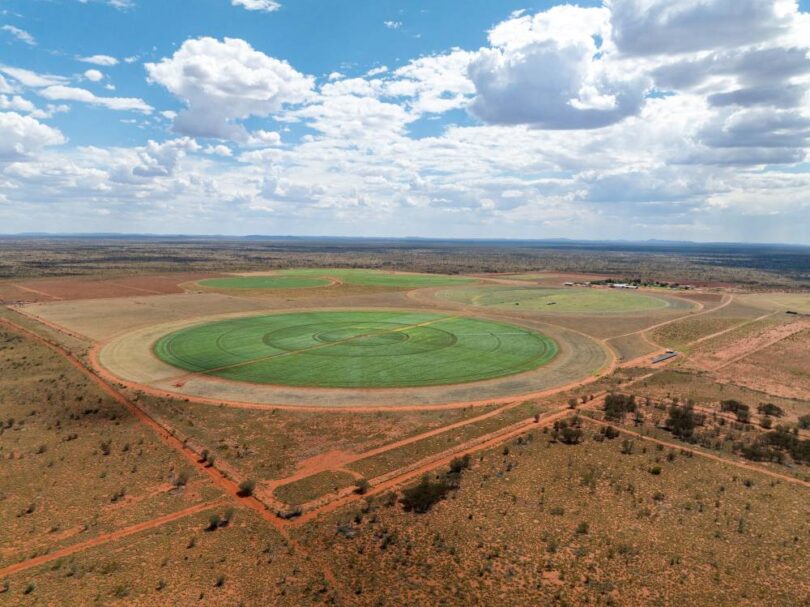
Located around 200 kilometres north of Alice Springs, the site operates in a region characterised by extreme heat and low rainfall, with annual precipitation averaging just 15 centimetres.
In such conditions, reliable access to water is essential not only for crop production but also for maintaining broader economic activity, including tourism and livestock support.
The improved system now supports irrigation across multiple crops, including hay production for the Northern Territory’s beef industry, as well as orchards and other agricultural outputs.
Decentralised renewable systems gain traction in water management
The project reflects a broader trend towards decentralised water and energy systems, particularly in remote or off-grid locations where traditional infrastructure can be costly or unreliable.
Solar-powered pumping systems can adjust output based on available sunlight and demand, improving efficiency while reducing operating costs and emissions.
As climate pressures increase and water scarcity becomes more acute in many regions, such systems are expected to play a growing role in supporting both agricultural productivity and long-term sustainability.
The deployment highlights how combining renewable energy with water infrastructure can improve resilience in some of the world’s most challenging environments.
For more on water resilience and infrastructure, see our coverage of water and ocean systems.