


Floating offshore wind biodiversity coexistence is being highlighted in a new scientific report from Ocean Winds, based on eight years of environmental monitoring at the WindFloat Atlantic project off the coast of Portugal.
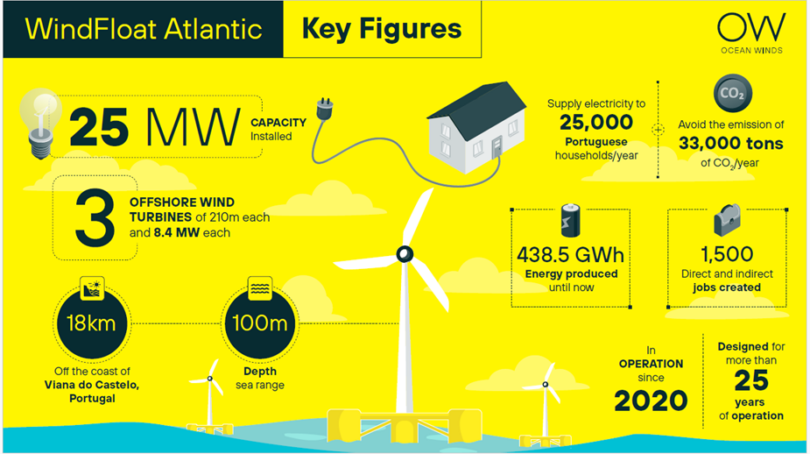
The report, unveiled at WindEurope Annual Event 2026, presents data from the 25 MW floating offshore wind farm located approximately 20 kilometres off Viana do Castelo. The findings indicate that offshore wind infrastructure can operate without disrupting marine ecosystems, while in some cases supporting increased biodiversity.
WindFloat Atlantic, a joint venture between EDP Renewables and ENGIE, is the world’s first semi-submersible floating offshore wind farm and has been operational since 2020.
Floating offshore wind biodiversity coexistence findings
The study identified more than 270 species within the project area, including fish, invertebrates, marine mammals, birds and bats. Researchers observed increased abundance of octopus and several fish species, particularly elasmobranchs such as rays and sharks.
Across trophic levels, natural seasonal and interannual variability remained the dominant factor shaping marine communities. However, overall species abundance was found to be higher within the wind farm area compared to control sites.
No negative impacts were detected on lower trophic levels such as phytoplankton and zooplankton, while positive ecological effects were observed at higher levels, including fish and invertebrates.
Reef and refuge effects support marine ecosystems
The report attributes these outcomes to two key mechanisms: the reef effect created by submerged structures and the refuge effect resulting from restricted fishing and navigation within the wind farm zone.
Together, these factors appear to create favourable conditions for feeding, shelter and habitat development, contributing to increased biodiversity within the project area.
Monitoring also recorded five marine mammal species, 33 bird species and three bat species, with the site primarily functioning as a migration corridor. Increased dolphin and porpoise activity was observed during the operational phase.
Scaling floating wind alongside environmental monitoring
The report was developed by Blue Grid, with contributions from the MARE – Marine and Environmental Sciences Centre and the Polytechnic of Leiria.
It emphasises the importance of long-term environmental monitoring in understanding ecosystem dynamics and supporting the responsible expansion of floating offshore wind.
The findings contribute to a growing body of evidence suggesting that offshore wind farms can provide ecosystem services, including habitat creation and potential support for commercial fish populations.
For more coverage, visit our Water & Ocean section.