

Cross-pavement EV charging policy UK is set to advance following new government commitments aimed at accelerating the transition to clean energy and expanding access to electric vehicle infrastructure.
Energy Secretary Ed Miliband outlined a package of measures focused on electrification during the Good Growth Foundation’s National Growth Debate, including plans to introduce permitted development rights for cross-pavement charging solutions.
The proposed legislation, expected this summer, is intended to reduce barriers for households without off-street parking, alongside a consultation on updated building regulations to increase EV charging provision in new developments and for renters and leaseholders.
Cross-pavement EV charging policy UK
The reforms are part of a broader effort to streamline planning processes and improve grid connections for clean energy infrastructure, supporting the expansion of EV charging networks across the country.
Industry stakeholders have highlighted the importance of these measures in addressing access challenges faced by drivers who cannot install private charge points.
John Lewis, CEO of char.gy, said the announcements indicate a shift toward more inclusive infrastructure deployment.
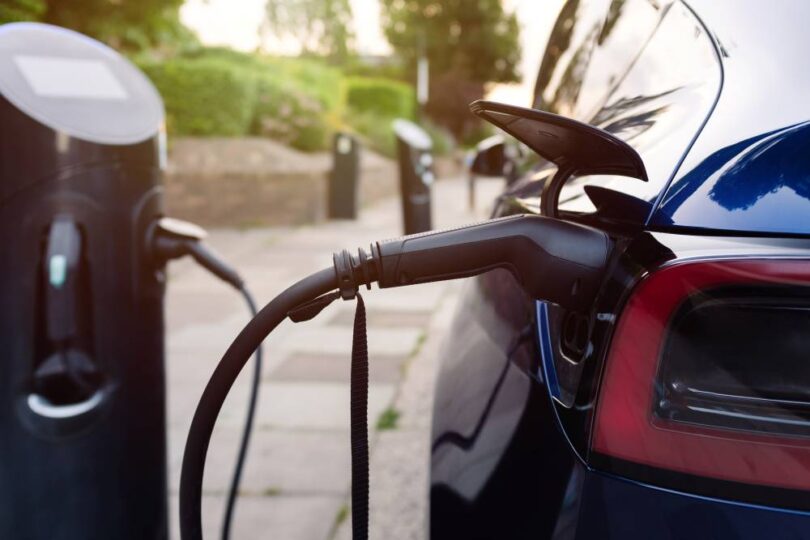
“These reforms will help unlock that potential at the scale and speed the transition demands,” he said, referencing the role of lamppost-based charging systems in expanding access.
Michael Goulden, CEO of Kerbo Charge, said the move to introduce permitted development rights addresses longstanding regulatory barriers.
“With home charging significantly cheaper than public alternatives, this opens the door to more affordable EV ownership for households without driveways,” he said.
Expanding access to EV charging infrastructure
Access to affordable charging remains a key factor in EV adoption, particularly in urban areas where a large proportion of residents rely on on-street parking.
By enabling cross-pavement solutions and supporting existing infrastructure such as lampposts, the government aims to bridge the gap between home and public charging options.
The measures are also expected to support wider clean energy objectives by accelerating the rollout of low-carbon transport solutions and improving the usability of EVs for a broader segment of the population.
For more coverage, visit our Transport section.