

Nexans and the European transmission system operator TenneT have started subsea cable production for the LanWin2 offshore grid connection project at Nexans’ facility in Halden, Norway. The companies announced the milestone in Paris on 16 October 2026.
This is the first industrial-scale production of Nexans’ 525 kV HVDC XLPE subsea cable technology. It also marks the start of the delivery phase for LanWin2. The project will transmit up to 2 GW of renewable electricity from the German North Sea to the country’s transmission grid, and commissioning is expected in 2031.
From qualification to large-scale delivery
Manufacturing began after the successful qualification of Nexans’ 525 kV HVDC XLPE cable technology. The technology is now moving from qualification and engineering to large-scale delivery under the companies’ long-term partnership. According to Nexans, the milestone also shows that its next-generation HVDC cable system is ready for large-scale deployment across Europe’s energy transition projects.
“This milestone marks the transition from qualification to full-scale manufacturing and delivery,” said Pascal Radue, EVP of PWR-Transmission at Nexans. “Starting industrial-scale production of our 525 kV HVDC XLPE subsea cable at industrial scale demonstrates the strength of our technology, our manufacturing capabilities, and our commitment to supporting Europe’s energy transition.”
Connecting North Sea wind to Schleswig-Holstein
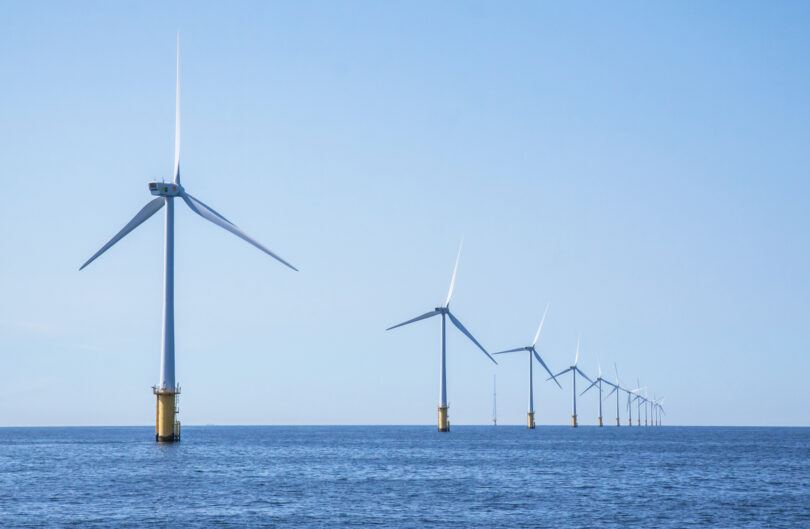
LanWin2 is one of TenneT’s 2 GW offshore grid connection projects. It is designed to carry renewable electricity generated in the German North Sea to the onshore transmission grid. The system will use high-voltage direct current (HVDC) technology to transmit up to 2 gigawatts of electricity to the Heide region in Schleswig-Holstein. There, the power will be fed into the German transmission network via the HeideHub.
The project will use Nexans’ 525 kV HVDC XLPE subsea cable technology to carry large volumes of renewable electricity over long distances. LanWin2 forms part of TenneT’s large-scale offshore grid expansion programme.
Climate Global News has previously reported on offshore wind grid connection work elsewhere in Europe, including turbine installation and cable works at France’s first floating offshore wind project in Occitanie.
Frame agreement aims to secure supply chain capacity
The start of production follows a strategic partnership between the two companies. Their frame agreement was established in 2023 as a long-term approach to secure supply chain capacity, provide planning certainty and speed up delivery of the transmission infrastructure needed for Europe’s energy transition.
For TenneT, the project is another step towards Germany’s offshore wind ambitions and towards a more reliable future energy system.
“The start of cable production for LanWin2 is an important milestone for the project and for our 2 GW programme as a whole,” said Matthias Mensing, Head of Investment Projects Management & Support at TenneT. “Together with Nexans, we are moving from planning and qualification into industrial-scale delivery. Long-term partnerships like this give us the supply-chain capacity and planning certainty we need to deliver the offshore grid infrastructure for Germany’s energy transition.”
BalWin3 installation planned for 2027
The cables will be installed as part of the LanWin2 project. According to the companies, the production milestone also shows the technology is ready for other projects under the TenneT frame agreement. These include BalWin3, where cable installation in the Wadden Sea and nearshore areas is planned for 2027.
Both LanWin2 and BalWin3 remain on schedule.
About Nexans
Nexans describes itself as a pure player in sustainable electrification. It designs and supplies cable solutions, accessories and services for applications ranging from offshore and onshore renewable energy to smart cities and homes. The company has more than 140 years of history and operates through three core businesses: PWR Transmission, PWR Grid and PWR Connect.
Nexans operates in 39 countries with 12,830 people. It generated €6.1 billion in standard sales in 2025. The company is committed to net-zero emissions by 2050 in line with the Science Based Targets initiative (SBTi), and it supports energy access through the Fondation Nexans. Nexans is listed on Euronext Paris, Compartment A.
About TenneT
TenneT is a European transmission system operator responsible for the secure and reliable transmission of electricity in the Netherlands and a large part of Germany.
Frequently asked questions
LanWin2 is one of TenneT’s 2 GW offshore grid connection projects. It will use HVDC technology to transmit up to 2 GW of renewable electricity from the German North Sea to the Heide region in Schleswig-Holstein, where it will connect to the grid via the HeideHub.
The subsea cables are being produced at Nexans’ facility in Halden, Norway.
It is the first industrial-scale manufacturing of Nexans’ 525 kV HVDC XLPE subsea cable technology. It marks the technology’s move from qualification and engineering to large-scale delivery.
LanWin2 is expected to be commissioned in 2031, and the project remains on schedule.
The frame agreement, established in 2023, also covers BalWin3. Cable installation for BalWin3 in the Wadden Sea and nearshore areas is planned for 2027.