


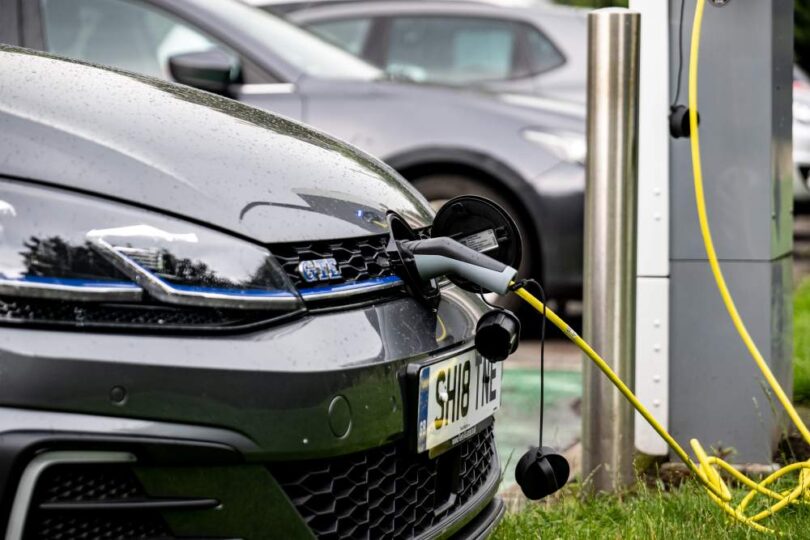
Kerbside EV charging costs in the UK are set to fall under a new initiative from Octopus Energy, which is introducing discounted public charging rates aimed at drivers without access to home charging.
The company has launched a new offering through Octopus Electric Vehicles, enabling eligible customers to access on-street charging from 22.5p per kWh, equivalent to around 7p per mile.
The initiative is designed to address one of the main barriers to electric vehicle adoption, particularly for households without driveways who rely on public charging infrastructure.
Reducing kerbside EV charging costs in the UK
The discounted rates are initially available across around 20,000 charge points operated by providers including Ubitricity and Connected Kerb.
Drivers can access the pricing through Octopus Electroverse, a public charging platform that aggregates multiple networks.
According to the company, the pricing brings public charging costs closer to those of home charging and significantly below the cost of petrol for comparable mileage.
The offer is currently limited to customers leasing electric vehicles through Octopus Electric Vehicles.
Addressing access to EV infrastructure
Access to home charging has been widely identified as a key factor influencing electric vehicle adoption. However, a significant proportion of UK households do not have access to private driveways.
Public charging infrastructure has expanded rapidly in recent years, with the number of available charge points increasing across urban and residential areas.
By reducing the cost differential between home and public charging, initiatives such as this aim to make EV ownership more accessible to a broader range of drivers.
Industry context: public charging and EV adoption
The transition to electric vehicles depends not only on vehicle availability but also on the accessibility and affordability of charging infrastructure.
While home charging remains the lowest-cost option, public and kerbside charging are critical for urban populations and those without off-street parking.
Within this context, kerbside EV charging costs in the UK are becoming a key focus area for both policymakers and energy providers seeking to accelerate adoption.
For more coverage, visit our Transport section.