


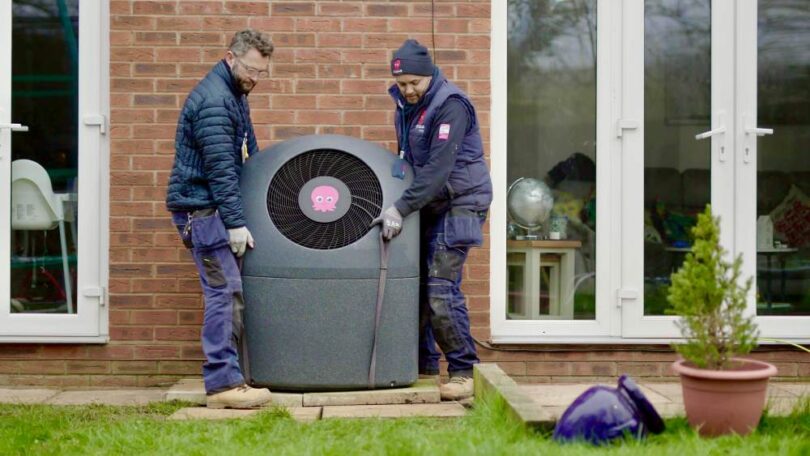
Solar and heat pump sales surge UK as households respond to rising energy price volatility, with new data indicating a sharp increase in demand for low-carbon technologies including solar panels, heat pumps and electric vehicle charging.
Figures released by Octopus Energy show significant growth across multiple technologies, as consumers seek greater control over energy costs amid global market uncertainty.
Solar installations increased by 54%, while heat pump sales rose by 51%, and electric vehicle charger demand climbed by 20% over the same period. The data reflects a broader shift in consumer behaviour as households prioritise energy independence and long-term cost stability.
Solar and heat pump sales surge UK amid energy price volatility
The solar and heat pump sales surge UK trend has been linked to recent fluctuations in global energy markets, with rising gas and fuel prices prompting homeowners to explore alternatives to fossil fuels.
Industry data suggests that households are increasingly investing in combined systems, including rooftop solar panels paired with battery storage and heat pumps, allowing them to generate, store and manage their own energy supply.
Demand is also being driven by a desire to reduce exposure to external price shocks, with energy independence emerging as a key motivator for adoption.
Rebecca Dibb-Simkin, Chief Product Officer at Octopus Energy, said:
“We are seeing a massive shift as people stop just asking and start acting. British families are tired of being held hostage by global fossil fuel prices.
“By switching to solar and heat pumps, they are becoming their own power stations – locking in low costs and protecting their wallets for the long term.”
Regional trends show particularly strong uptake in East Anglia, which has emerged as a leading area for both solar and heat pump installations.
To meet growing demand, providers are also accelerating deployment timelines. In one example, a heat pump installation for a UK household was completed within 10 days from initial quote to installation, highlighting efforts to scale delivery capacity.
Technology integration supports long-term energy transition
The increase in installations reflects a broader shift towards integrated energy systems, where multiple technologies work together to optimise efficiency and reduce reliance on the grid.
Heat pumps, which can deliver several units of heat for every unit of electricity consumed, are being combined with solar generation to further reduce running costs. At the same time, EV chargers are enabling households to align transport and energy use within a single electrified system.
Public interest in these technologies is also increasing, with search data indicating rising engagement as consumers seek to understand how low-carbon systems operate and how they can be deployed in residential settings.
Performance data from operational systems suggests that many households are already seeing cost benefits compared to traditional fossil fuel heating, reinforcing the economic case for adoption alongside environmental considerations.
As the UK continues its transition towards a lower-carbon energy system, the combination of consumer demand, technological maturity and market conditions appears to be accelerating uptake across multiple sectors.
More coverage on the transition to cleaner transport and energy systems can be found in our Transport section.