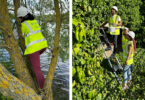



The England Ecosystem Survey will receive national coordination and field delivery support from Jacobs after the company was selected by Natural England and the Department for Environment, Food & Rural Affairs (Defra). The survey forms a central part of the UK Government’s Natural Capital and Ecosystem Assessment (NCEA) programme, which aims to establish a baseline of England’s natural assets by 2029.
The project will support the collection of national-scale soil, vegetation and landscape data across England, providing evidence to inform environmental policy, land management decisions and long-term ecosystem monitoring.
England Ecosystem Survey to Deliver National Environmental Baseline
The England Ecosystem Survey is described as England’s largest ever field survey of terrestrial environments. It will assess the condition, extent and change of land, freshwater and coastal ecosystems.
Jacobs will coordinate programme management, contractor procurement, field logistics and land access arrangements. The company will also manage dependencies between different survey types to ensure resulting datasets are aligned and usable at a national scale.
Jacobs will work in partnership with RSK Group, through its subsidiary Southern Ecological Solutions, to mobilise internal survey teams and multiple contractors across England. Activities are expected to conclude in the first half of 2027.
Jacobs Executive Vice President Richard Sanderson said high-quality environmental decisions rely on consistent and reliable data, adding that national coordination will help build a robust evidence base to understand ecosystem condition and track change over time.
Supporting the Natural Capital and Ecosystem Assessment Programme
The work builds on Jacobs’ previous involvement in the England Ecosystem Survey, where the company has delivered soil sampling services since 2024.
Natural England is delivering the survey under Defra’s Natural Capital and Ecosystem Assessment (NCEA) programme, alongside Forest Research, the Environment Agency, the Joint Nature Conservation Committee and the Royal Botanic Gardens Kew.
The NCEA programme forms part of the UK Government’s Major Projects Portfolio and supports national environmental commitments, including those outlined in the 25 Year Environment Plan and biodiversity frameworks, as well as progress towards net-zero objectives.
Data collected through the England Ecosystem Survey will include habitat condition, vegetation characteristics, landscape features and soil properties such as physical, chemical and biological indicators. The findings are expected to inform ecosystem service assessments, including food production, biodiversity and environmental resilience.
Further coverage on national biodiversity and land monitoring initiatives can be found in our Earth & Nature section.