


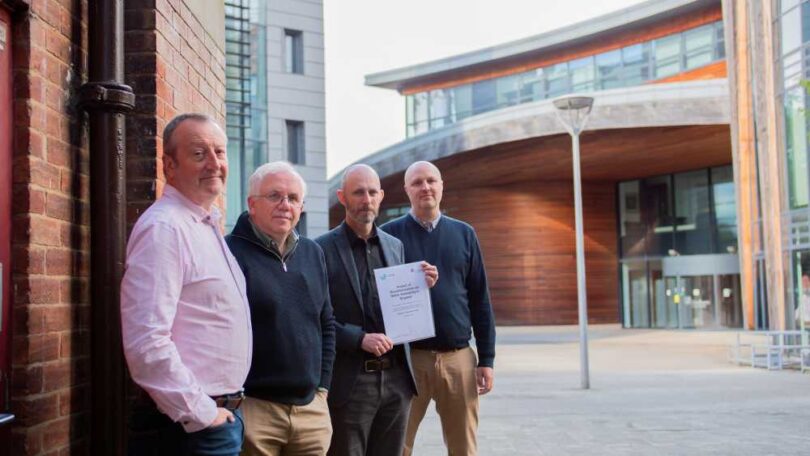
The report, commissioned by national water retailer Wave Utilities in collaboration with Durham University, found that the water needed for carbon capture and hydrogen production could push some regions into deficit as early as 2030. By 2050, these projects are projected to add an extra 860 million litres of water demand per day across England.
Researchers analysed decarbonisation activity across the UK’s five major industrial clusters – Humberside, North West England, Tees Valley, the Solent and the Black Country – to estimate the water resources required to reach net zero. Their findings reveal a series of regional imbalances and growing risks for industry and infrastructure.
Regional outlook
- Humberside: Decarbonisation activities could push the East Anglian region, supplied by Anglian Water, into water deficit by 2030, with a total shortfall of 130 million litres per day by 2050.
- North West: The cluster could face a deficit of around 70 million litres per day by 2030, though long-term strategies by United Utilities are expected to create a surplus by 2045.
- Teesside and the Black Country: Water supplies in Northumbrian Water and Severn Trent regions are projected to remain stable, with surpluses forecast by 2050.
According to the Environment Agency, the UK could face a national shortfall of nearly five billion litres of water per day by 2055. The new findings underscore the urgent need for joint planning between decarbonisation projects and water providers to safeguard supply.
Expert commentary
Professor Simon Mathias of Durham University said: “Our analysis shows that decarbonisation efforts associated with carbon capture and hydrogen production could add up to 860 million litres of daily water demand by 2050. In some regions, such as those served by Anglian Water and United Utilities, deficits could appear by 2030 unless proactive measures are taken. Exploring innovative ways to reduce the water demand of decarbonisation technologies must be a priority.”
Nigel Corfield, Industrial and Commercial Customer Director at Wave, added: “Water is a resource that’s often taken for granted. When it comes