

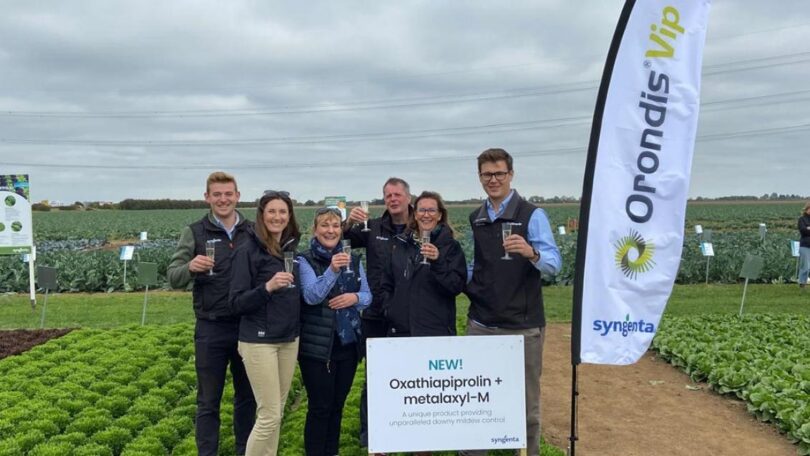
The new formulation replaces the previous combination of ORONDIS® Plus and AMISTAR®, long used by onion and leafy-salad growers. According to Syngenta, the two complementary active ingredients in ORONDIS® Vip work synergistically to deliver internal and external leaf protection under challenging weather conditions.
Simon Jackson, Field Technical Manager at Syngenta, said: “OXTP provides dependable, high-performance control of downy mildew, which can severely reduce marketable yield in brassicas, alliums and salad crops.”
Trial results from Syngenta’s Vegetable Innovation Site in Lincolnshire have shown consistent protection when the fungicide is used as part of a brassica disease-management programme.
OXTP rapidly binds into the waxy leaf surface and moves through the plant tissue to give extended control before disease can spread. This mechanism offers strong protection in conditions that favour infection, such as high humidity and rainfall. Metalaxyl-M inhibits rRNA synthesis within disease cells, preventing protein production and spore growth. Together, the dual modes of action improve efficacy while supporting resistance management.
ORONDIS® Vip is applied at a rate of 0.5 L/ha for all labelled crops, with two applications permitted for brassicas and alliums. In addition to leafy salads, the product is approved for herb crops and edible flowers—important high-value markets for some growers.
Jackson added: “ORONDIS® Vip offers season-long protection and reliable control under high disease pressure, helping growers maintain crop quality and yield.”