

Over the past few years, Serbia’s economy has proven more resilient than many across the region — and Europe more broadly. Looking ahead, this resilience is set to transform into sustained growth, with the IMF projecting 3.5% real GDP growth in 2025, rising to 4% in 2026 and 4.5% in 2027. At the heart of this trajectory lies a strategic energy shift: diversifying sources and accelerating the move towards renewables. This transformation is not only an economic necessity but also a cornerstone for cleaner air, healthier communities, and stronger geopolitical stability.
Beyond boosting economic prospects, the shift to renewables — and away from locally sourced coal — promises a significant improvement in public health. Many Serbian cities still struggle with heavy winter air pollution, largely due to coal-based heating. Cleaner energy sources will help reduce this burden, improve quality of life, and contribute to global climate action efforts.
Energy diversification also plays a crucial role in ensuring long-term stability and in preserving Serbia’s political neutrality — a stance that has proven valuable for the Western Balkans and for Europe as a whole.
This month, Serbia adopted its Just Energy Transition Plan, designed to reduce reliance on coal and other fossil fuels while protecting the livelihoods of local communities, businesses, and workers currently engaged in coal mining and coal power plant operations. The plan charts a strategic path toward renewables, complemented by investments in modern gas plants to ensure a stable transition.
Serbia is not undertaking this journey alone. The country continues to rely on strong partnerships with the United States and the European Union for both technological expertise and financial investment.
Partnership with the United States is fundamental. In September last year, Serbian Foreign Minister Marko Đurić traveled to Washington D.C. to sign an Agreement of Strategic Cooperation in the field of Energy, aimed at encouraging U.S. companies to invest in Serbia’s energy sector and to support the development of green energy projects.
On the European side, cooperation remains equally vital. Recently, the EU approved €240 million in non-repayable funds for projects worth €325.2 million, focused on boosting renewables as well as improving waste and wastewater management in Serbia. Out of these funds, €140 million is allocated specifically to air quality and energy efficiency improvements. In July, German development bank KfW signed a €135 million loan agreement to further accelerate the shift toward cleaner energy and align Serbia with EU standards and policies.
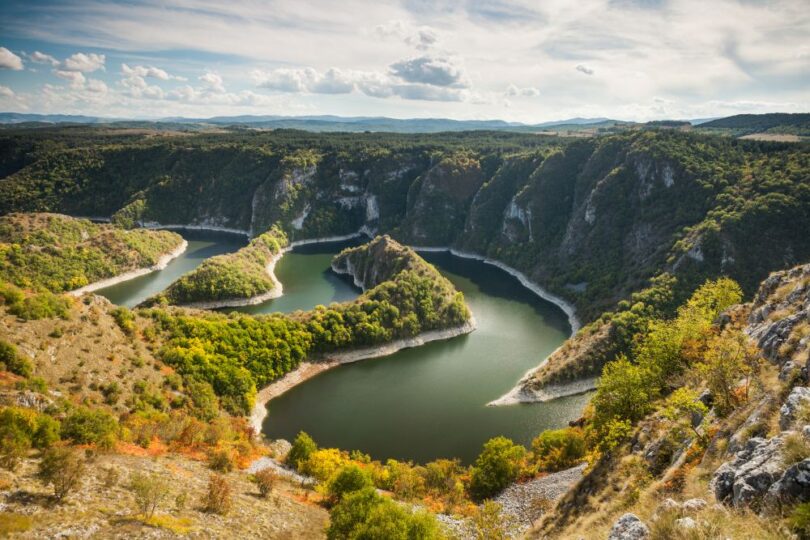
Hydropower remains one of Serbia’s strongest assets in the green transition. Currently, it accounts for between a quarter and a third of the country’s electricity generation. Many of the existing plants can be upgraded for greater efficiency, and there is potential to expand capacity on numerous rivers. One key project under consideration is the expansion of the Potpeć–Bistrica hydroelectric system in Western Serbia, in cooperation with the Japan International Cooperation Agency.
Wind and solar power are also gaining momentum. In Eastern Serbia, the former Kostolac coal mine dumping site is being transformed into a 20-turbine wind farm expected to produce 187 GWh annually, alongside a 10-megawatt solar plant. In Novi Sad, an EBRD-financed initiative will see parts of the city’s district heating system powered by solar energy, reducing reliance on natural gas.
In parallel, Serbia is planning the construction of new gas interconnectors with Romania and North Macedonia over the next three years, providing greater flexibility in the energy mix and supporting the gradual replacement of coal-fired power.
Beyond generation capacity, Serbia also sees potential in becoming part of the emerging global battery value chain — from raw materials processing to component manufacturing and recycling. Leveraging its strategic location, industrial tradition, and partnerships with the EU, the United States, and other global players, the country could position itself as a reliable partner in the development of battery technologies for electric vehicles and energy storage. While these opportunities require careful planning, alignment with environmental standards, and significant investment, they could further integrate Serbia into future-oriented industries that support both economic growth and the green transition.
In the years ahead, Serbia’s success will depend on its ability to combine domestic resources with international expertise, implement its Just Energy Transition Plan effectively, and ensure that the benefits of the transition are widely shared. Done right, this is a historic opportunity to position Serbia as a regional leader in clean energy — delivering economic growth, stability, and a healthier environment for generations to come.