


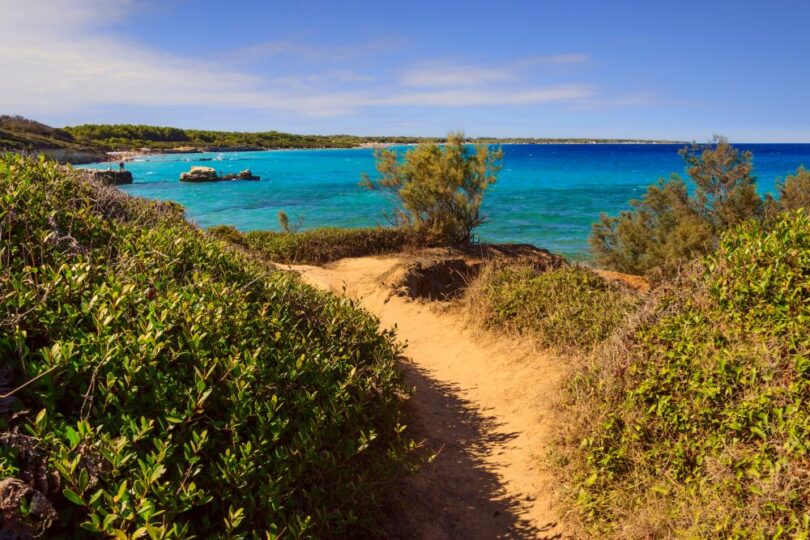
A new study led by the Euro-Mediterranean Centre on Climate Change (CMCC) has provided high-resolution coastal flood hazard maps for the municipality of Lecce in Salento, Italy. The research, published in the Journal of Water and Climate Change, offers a 35-year outlook for the region’s coastline, highlighting how sea level rise and extreme events may increase flood risks for urban and agricultural areas.
Mapping future risks
The study combines one-metre-resolution digital terrain modelling with projections of extreme sea levels — factoring in high tides, storm surge, wave setup and long-term mean sea level rise. Researchers from CMCC and Politecnico di Milano produced detailed flood maps that pinpoint vulnerable stretches of coast.
Key findings include:
– Vulnerable ingress points are found where dune belts are damaged, along key roads, and at reclamation canals.
– Areas near former lagoons and dune-removed zones are especially susceptible.
– Of the 15 km of coastline analysed, the northern sectors — Spiaggiabella, Torre Chianca, and a site in Frigole — face the highest risks.
– In Spiaggiabella, the flooded urbanised area during extreme events could nearly double, from 11 hectares in 2020 to 20 hectares by 2060.
Eight detailed flood maps are available via Zenodo.
Vulnerable areas identified
– Spiaggiabella: The former Fiumicelli lagoon area, particularly between Via Portonovo and Via Porto Ercole.
– Torre Chianca: The zone around the Fetida pond affecting Piazza Paradiso and surrounding streets.
– Frigole: Seawater could overtop Lungomare Attilio Mori through a passage near a beach club.
Recommendations for resilience
The researchers highlight several measures to reduce risk:
– Preserve and restore dune systems to act as natural barriers.
– Maintain reclamation canals to improve drainage and reduce waterlogging.
– Limit heavy summer parking near dunes and ponds to avoid soil compaction that exacerbates flooding.
– Integrate flood risk into long-term urban planning frameworks.
– Ensure continuous monitoring through instrumental networks to anticipate future events.
Gianandrea Mannarini, CMCC researcher and first author of the study said:
Continuous monitoring remains essential for anticipating flood events, and the most effective approach is to embed these vulnerabilities into urban planning.
Quick Reference Links
– CMCC – Euro-Mediterranean Centre on Climate Change
– Politecnico di Milano
– Study and supplementary flood maps on Zenodo