

Airengy and Nobian have signed a partnership agreement to explore the development of a compressed air energy storage project in Denmark.
The proposed compressed air power plant would connect Airengy’s AirBattery technology to an existing Nobian-operated salt cavern, with a potential storage capacity of 2.5 GWh and output in the range of 3-10 MW.
The agreement adds Denmark to Airengy’s growing European project pipeline, following previously announced compressed air power plant partnerships in England, Romania and Germany.
Salt cavern storage under review
The planned project would use an existing salt cavern operated by Nobian, a European producer of high-purity salt, essential chemicals and underground energy storage caverns.
Under the agreement, Nobian will be responsible for salt cavern-related work, including regulatory and permitting processes, local communication, stakeholder management and related infrastructure. Nobian will remain the licence holder and operator of the cavern.
Airengy will be responsible for the AirBattery system design, air compression and electricity generation using its proprietary compressed air technology.
“At Nobian, we see large-scale energy storage as a critical building block of a reliable and affordable renewable energy system,” said Louwrens op de Beek, Director Energy Storage at Nobian.
“By exploring the combination of our salt cavern expertise with Airengy’s innovative technology, we aim to unlock new ways to store and release energy over longer periods, helping to reduce grid congestion.”
Long-duration storage for renewable energy systems
Nobian’s storage caverns page says energy storage is critical to future energy systems, with solar and wind generation creating a growing need for flexibility and energy buffers.
The company says salt caverns can provide an underground storage route for energy carriers and balancing services, including hydrogen and compressed air.
Compressed air energy storage systems use electricity to compress air for storage, then release it later through a generation system when power is needed. In this case, the partners are assessing the use of geological infrastructure already operated by Nobian in Denmark.
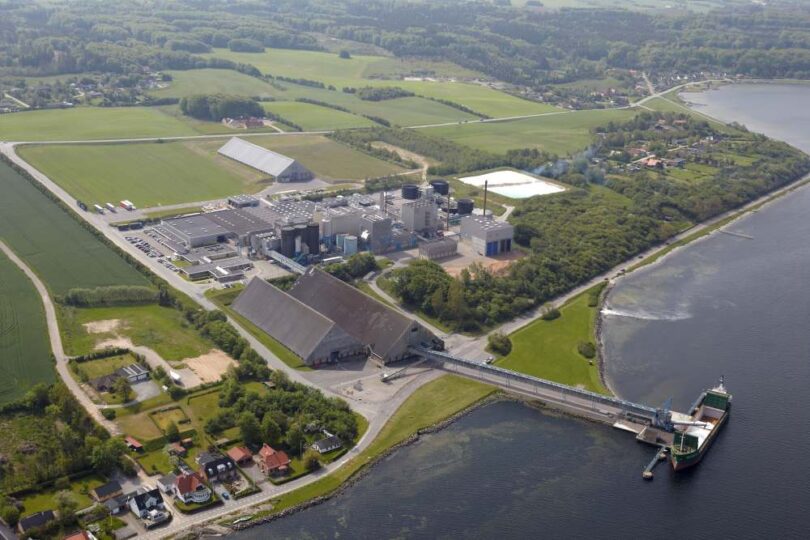
The image supplied with the announcement shows Dansk Salt’s fully electrified salt production facility in Mariager, Denmark. Nobian’s Mariager site page says Nobian/Dansk Salt A/S is the only manufacturer of vacuum salt in the Nordic countries.
Airengy expands European partnerships
Airengy said the Nobian agreement is the fourth compressed air power plant partnership it has announced in Europe, following agreements covering England, Romania and Germany.
The company said the agreement forms part of a two-phase strategy that includes smaller 1-1.5 MW plants in Romania and England while advancing larger-scale projects in Romania and Denmark.
“The agreement with Nobian continues and advances our deployment into our European target markets and proves the company’s implementation capabilities,” said Maj. Gen. (res.) Yiftah Ron-Tal, Chairman of Airengy.
“The collaboration connects Airengy’s energy-storage technology with existing geological infrastructure and industry know-how.”
Airengy CEO Tal Raz said the company is also exploring potential applications for its compressed air power plant technology in the data centre sector, where demand for energy infrastructure is expected to grow.
“We believe the coming decade will be defined by the construction of new energy infrastructure for electricity grids, industry, and data centers,” Raz said.
Read more clean energy and storage coverage in Climate Global News’ Energy and Technology & Innovation sections.
FAQs
What have Airengy and Nobian agreed?
They have agreed to explore and assess the potential development of a compressed air energy storage project connected to a Nobian-operated salt cavern in Denmark.
How large could the project be?
The proposed project has a potential storage capacity of 2.5 GWh and an output range of 3-10 MW.
What role will Nobian play?
Nobian will handle salt cavern-related work, regulatory and permitting processes, local communication, stakeholder management and related infrastructure. It will remain the licence holder and cavern operator.
What role will Airengy play?
Airengy will be responsible for the AirBattery system design, air compression and electricity generation using its compressed air technology.