

Deep geological disposal of spent nuclear fuel is being assessed using high-performance supercomputing as part of a long-term safety modelling project linked to Finland’s ONKALO® repository. Scientific and environmental consultancy Amphos 21 is undertaking advanced groundwater chemistry simulations designed to evaluate repository stability over timescales of up to one million years.
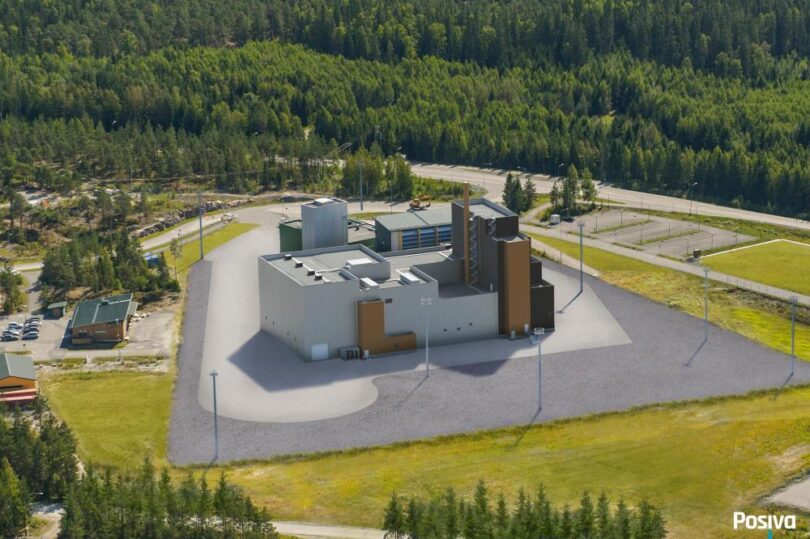
The modelling work is being carried out for Posiva Oy, the Finnish company constructing the ONKALO® spent nuclear fuel repository in Olkiluoto. The facility is widely regarded as the world’s first operational deep geological repository for spent nuclear fuel.
Deep Geological Disposal and Long-Term Climate Modelling
The project, known as OL-STAR, applies reactive hydrogeochemical modelling to assess how groundwater chemistry in fractured crystalline bedrock may evolve over geological timescales. The simulations consider potential future environmental scenarios including glaciation, submergence, temperate climate phases and other long-term planetary changes.
To support this analysis, the project is using LUMI, the flagship supercomputer of the European High Performance Computing Joint Undertaking (EuroHPC JU). Researchers have been granted 13.8 million core-hours of computing time to conduct calculations that would otherwise require decades on conventional systems.
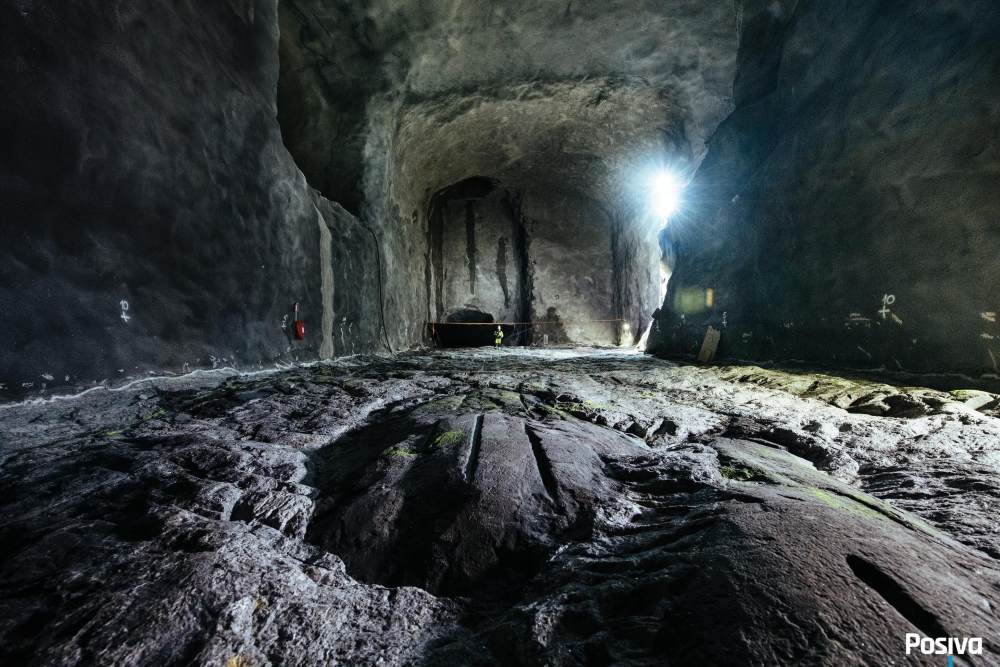
Rock surfaces inside the ONKALO® underground repository in Olkiluoto, Finland. Picture: Tiina Lamminmäki, Posiva Oy.
The modelling integrates density-driven groundwater flow, microbiological processes and reactive transport mechanisms in crystalline rock formations. By incorporating more complex hydrogeochemical interactions than previous assessments allowed, the project aims to improve confidence in predictions of long-term repository stability.
Tiina Lamminmäki, Principal Chemist at Posiva Oy and principal investigator of the OL-STAR project, noted that earlier safety assessments required simplifications due to computational limitations. Access to high-performance computing enables a more detailed representation of the processes influencing groundwater chemistry over extended timescales.
Environmental Governance and Intergenerational Risk
The long-term safety case for deep geological disposal depends on demonstrating that suitable hydrogeochemical conditions can be maintained in the host rock for thousands to hundreds of thousands of years. This includes modelling future ice ages and associated pressure changes, as well as potential marine submergence scenarios.
Globally, most spent nuclear fuel remains in interim storage facilities. Permanent geological repositories are intended to provide passive, long-term containment without ongoing human intervention. Demonstrating environmental stability across geological timescales is therefore central to regulatory approval and public confidence.
The ONKALO® facility forms part of Finland’s national nuclear waste management strategy. Further reporting on energy infrastructure and long-term environmental safety can be found in our Energy coverage.