


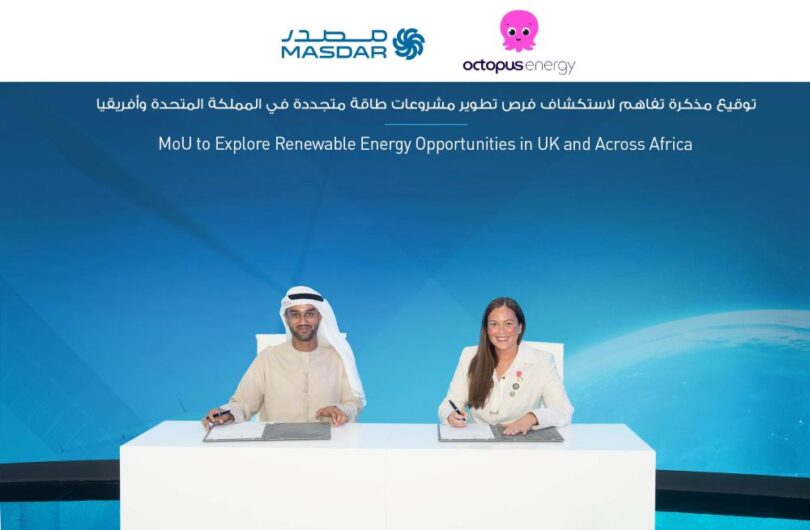
Octopus Energy and Abu Dhabi Future Energy Company Masdar have signed two memoranda of understanding to explore renewable energy opportunities in the UK and across Africa, with a focus on grid constraints, distributed generation and growing electricity demand.
The agreements set out a framework for collaboration on clean energy systems designed to address some of the most pressing challenges facing power networks in both mature and emerging markets.
Addressing grid constraints in the UK
In the UK, the partnership will examine ways to unlock capacity within the existing electricity distribution network to support new sources of demand, including data centres.
Grid connection delays have become a major barrier to deploying new renewable energy projects and connecting large electricity users, with some developments facing multi-year waiting periods. At the same time, electricity demand is rising rapidly, driven in part by the growth of data centres and artificial intelligence workloads.
Under the proposed approach, Octopus and Masdar will explore the use of local energy systems that combine on-site solar generation, battery storage and flexible grid connections. These systems aim to make use of available capacity within local networks, reducing reliance on major grid reinforcements.
Octopus’s digital energy platform will be used to balance on-site generation, storage and grid supply, helping to manage demand while maintaining reliability.
Scaling distributed renewables in Africa
The second agreement focuses on expanding access to clean energy across Africa, initially in South Africa, with the intention of extending projects to other countries.
The partnership will explore distributed energy systems and local grids designed to serve commercial and industrial users, addressing chronic challenges including underinvestment in grid infrastructure and limited system flexibility.
Such approaches are increasingly seen as a way to support economic activity while reducing reliance on diesel generation and improving energy security.
Strategic context
Masdar and Octopus have an existing relationship, with Masdar licensing Octopus’s Kraken technology platform in 2023 to manage its battery storage portfolio in the UK.
The new agreements reflect broader trends in the energy transition, where smart systems, flexibility and distributed generation are becoming essential tools for integrating renewables and meeting rising demand without overloading existing networks.
As electricity systems face mounting pressure from climate targets, digitalisation and new demand sources, partnerships focused on system-level innovation are expected to play a growing role in shaping future energy infrastructure.