

Combining AI with physics-based modelling
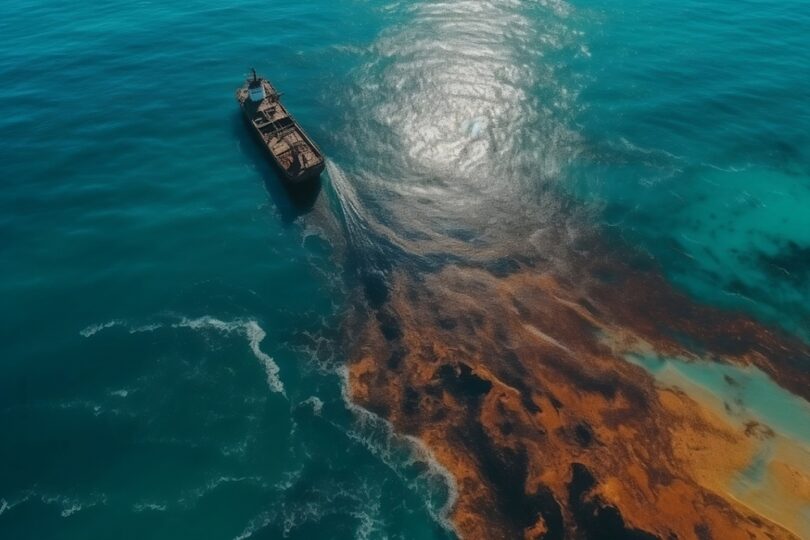
Oil spills are among the most damaging environmental disasters, threatening marine ecosystems, coastal economies, and human health. Traditional numerical models, such as MEDSLIK-II, simulate the movement of oil particles in the ocean but rely heavily on expert judgement to tune key physical parameters. This manual process can introduce uncertainty and limit forecast reliability.
The new study, published in Ecological Informatics, addresses this limitation by introducing Bayesian optimisation – an AI technique that learns from satellite data to automatically adjust model parameters. This hybrid method combines the reliability of physics-based simulations with the adaptability of machine learning.
Key findings
- Improved accuracy of oil spill forecasts, achieving up to 20% better alignment with satellite observations and 25% better position tracking.
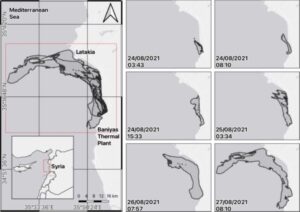
- Validated on the 2021 Baniyas oil spill in Syria, where over 12,000 cubic metres of oil entered the Mediterranean.
- Enhanced operational speed by automating calibration, enabling faster analyses and scenario testing for emergency response.
- Transferable framework applicable to other environmental forecasting systems, such as atmospheric and oceanic models.
Real-world validation
Researchers tested the hybrid approach on the Baniyas oil spill in August 2021. Results showed consistent improvements across multiple time steps, particularly under conditions of high drift variability. Accuracy gains could help emergency services deploy containment and clean-up operations more effectively, reducing long-term damage to ecosystems and coastal communities.
“This work represents a step forward in narrowing the gap between traditional numerical modelling and AI methodologies,” said Gabriele Accarino, researcher at CMCC and Columbia University. “By coupling Bayesian optimisation with the MEDSLIK-II model, we introduced a prototype for next-generation operational forecasting systems.”
Beyond oil spills
The researchers emphasise that the framework is not limited to oil spill events. Its capacity to update in real time as new observations arrive makes it applicable to a range of environmental forecasting systems. Potential applications include atmospheric simulations and broader ocean circulation models, helping reduce long-standing modelling uncertainties.
“Our approach complements, rather than replaces, physics-based modelling,” explained CMCC researcher Marco De Carlo. “It enhances realism and reliability, even when data are limited, making it highly suitable for operational use during emergencies.”
Next steps
While further testing on additional real-world spill events is required, the study marks an important advance in combining artificial intelligence with established environmental models. As climate change increases the risks of extreme events, innovative forecasting systems like this will be crucial for protecting marine ecosystems and supporting coastal resilience strategies.