

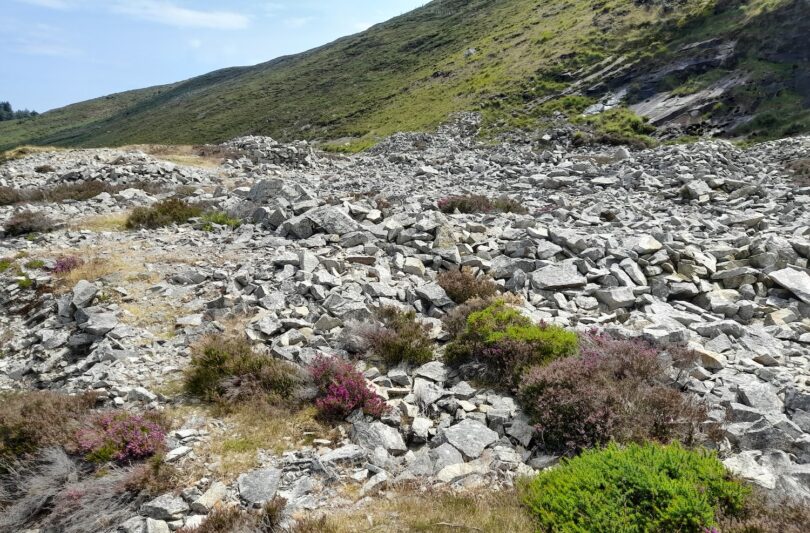
The devastating impact of wildfire on nature has been powerfully illustrated following research focusing on part of Northern Ireland’s Mourne Mountains Area of Special Scientific Interest and Special Area of Conservation after a recent blaze.
Conducted by ecologists from RSK Ireland for the National Trust and funded by the Department of Agriculture, Environment and Rural Affairs (DAERA)’s Environment Fund Strategic Strand, the study was designed to create a greater understanding of the long-term impacts of fire by focusing on insect communities in these heathland habitats.
RSK Ireland Senior Ecologist Adam Mantell said: “The study examined an area of heath known as Thomas’s Mountain, which had burned in 2021, and compared it to a nearby area that hadn’t. This enables an assessment to be made of the impact of the wildfire on invertebrate populations and their capacity to recover. Wildfire is a significant risk to our natural landscape and wildlife living there – we are reminded of the risk again this year following a very dry spring, and forecasts of a warm and dry summer. The more we understand now about the impact on species, the better prepared we are to prevent further devastation.”
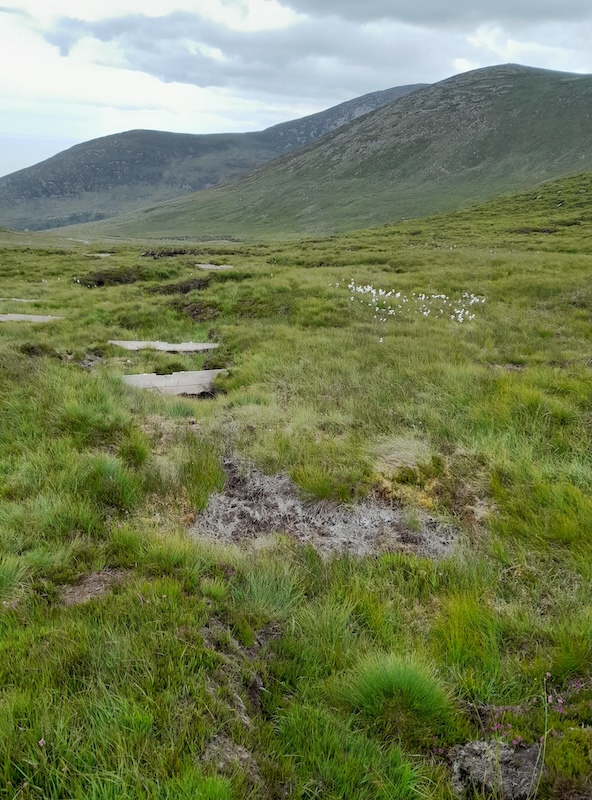
Researchers are developing an understanding of how long the habitat takes to recover to pre-fire health and the wildlife populations living there are a key indicator. Adam said: “Our research indicates that the 2021 fire caused severe damage to the heathland and the invertebrate population it supports. What we’ve seen is a significant reduction in invertebrate numbers in burned areas. That matters because invertebrates sit low on the food chain, supporting birds, reptiles, amphibians and mammals. If you wipe out 90% of the invertebrates, you’re also impacting everything that feeds on them.
“In terms of impacts, we often focus on vegetation, and plants make up only one part of the ecological picture. There are relatively few plant and bird species – about 300 breeding bird species in Ireland and roughly 3800 plant species. But when it comes to invertebrates, the numbers are far greater: 400 species of spiders, 1400 species of moths and butterflies, 2200 species of beetles and around 3500 species of flies. Because of this, they serve as excellent environmental indicators, offering a clearer picture of ecosystem changes.”
Adam added: “The study tells us that to avoid long-term damage to wildlife, management of fire risk is increasingly important, especially in these very sensitive habitats. This risk is exacerbated by a changing climate, which brings longer spells of very hot and dry weather like the conditions we saw in the spring of this year.”
The study, carried out over a three-month period in the summer of 2024, offers a snapshot of the heath’s recovery from the 2021 wildfires. Adam said: “Very little recent research has been done on the ecological impacts of burns in Ireland. That made this study both important and timely. You only had to glance at the news in April or May to see how common wildfires have become. Despite that, there’s been a gap in understanding just how long-lasting the damage can be.”
Following the site surveys, entomologists identified the invertebrate species found and assessed the ecological context. Adam said: “It was important not to just identify individual species, but to also understand how rare or scarce the recorded species are. From this we can begin to build a picture of whether the populations as we found them are at a level expected for the area or lower, and therefore understand their recovery rates.
“This study has helped highlight that the effects of burning aren’t short-lived. When a section of heathland is burned, it doesn’t recover by the following year – it may take decades. And if large areas burn or smaller patches are burned repeatedly, as has happened in places such as the Belfast Hills and the Mournes, the damage can be severe and cumulative.”
National Trust Nature Conservation Adviser Melina Quinn said: “We are very grateful for RSK’s survey work, data analysis and report. We have been monitoring habitat recovery through annual surveys and having this invertebrate data provides us with a more comprehensive picture. RSK’s work provides a sobering account of the long-lasting impacts of fires in our precious landscapes. We would like to acknowledge DAERA’s funding via the Carrier Bag Levy.”