


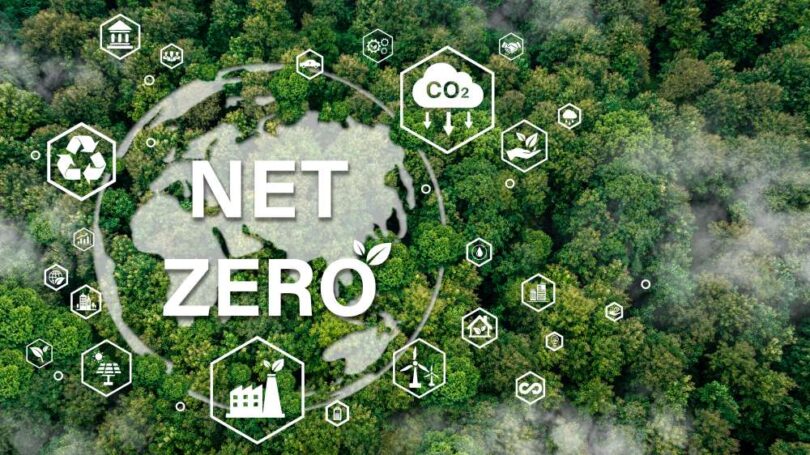
Net zero refers to the balance between the amount of greenhouse gases released into the atmosphere and the amount removed, resulting in no overall increase in emissions. Governments, businesses and institutions worldwide have adopted net zero as a central objective in efforts to limit climate change and reduce long-term environmental risk.
Rather than eliminating all emissions immediately, net zero requires significant emissions reductions alongside measures that remove or offset remaining emissions, such as carbon sequestration and ecosystem restoration.
What Does Net Zero Mean?
Net zero is achieved when human-caused greenhouse gas emissions are reduced as close to zero as possible, with any remaining emissions balanced by activities that remove carbon dioxide and other gases from the atmosphere.
This concept applies primarily to carbon dioxide, but many net zero strategies also address methane, nitrous oxide and other climate-warming gases.
Why Net Zero Matters
Net zero has become a cornerstone of global climate policy because it aligns with scientific assessments on limiting global temperature rise.
According to climate science bodies, achieving net zero emissions is necessary to stabilise global temperatures and reduce the severity of climate-related impacts such as extreme weather, sea-level rise and ecosystem disruption.
For organisations, net zero targets also play a growing role in risk management, regulatory compliance and long-term financial planning.
Net Zero Targets and Timelines
Many countries and organisations have committed to achieving net zero by mid-century, with interim targets designed to accelerate emissions reductions this decade.
These commitments typically include:
- Reducing emissions from energy, transport and industry
- Improving energy efficiency and electrification
- Increasing the use of renewable energy sources
- Investing in nature-based and technological carbon removal
The credibility of net zero targets increasingly depends on clear action plans, transparent reporting and measurable progress.
How Net Zero Is Achieved
Reaching net zero requires a combination of structural and technological change across the global economy.
Key approaches include decarbonising electricity generation, reducing fossil fuel use, transforming industrial processes and restoring natural carbon sinks such as forests and wetlands.
While carbon offsets may play a limited role, most climate experts emphasise that deep emissions reductions must come first.
Challenges and Criticism
Despite widespread adoption, net zero has faced criticism related to unclear definitions, overreliance on future technologies and inconsistent implementation.
Concerns include the quality of offsets, delays in emissions reductions and the risk of net zero commitments being used without sufficient accountability.
As a result, regulators and investors are increasingly scrutinising net zero claims and demanding stronger evidence and governance.
The Future of Net Zero
Net zero is expected to remain a defining framework for climate action, shaping policy, investment and corporate strategy for decades to come.
As standards evolve, greater emphasis is being placed on near-term emissions reductions, transparent reporting and alignment with scientific pathways.
Further analysis on climate targets, emissions reduction and sustainability strategy can be found in our Energy coverage.