


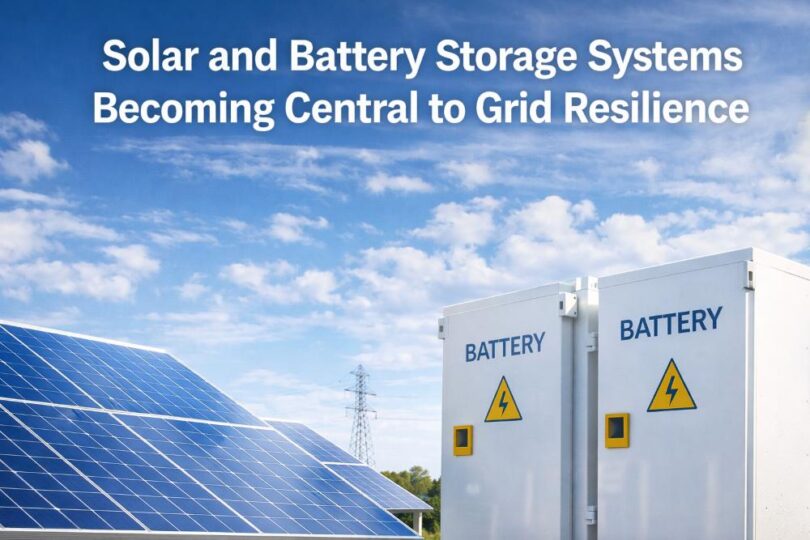
Solar and battery storage systems are increasingly being deployed together as energy providers seek to improve grid stability and manage rising electricity demand.
Energy companies and utilities are accelerating investment in solar generation combined with battery storage capacity, reflecting a broader shift in how electricity networks are designed and operated.
The approach is gaining traction in regions such as California and the United Kingdom, where renewable energy deployment is expanding while electricity grids face increasing pressure from extreme weather events, electrification and changing consumption patterns.
By pairing solar power generation with battery storage, energy produced during daylight hours can be stored and used later during periods of high demand or grid disruption.
Why solar and battery storage systems are expanding globally
The growth of solar and battery storage systems reflects a wider transformation in the energy sector as electricity systems move away from centralised fossil fuel generation toward distributed renewable energy infrastructure.
Solar photovoltaic systems generate electricity intermittently, producing the majority of power during daylight hours. Battery storage systems help address this variability by storing excess electricity and releasing it when generation drops or demand increases.
This capability is increasingly important as power systems integrate larger volumes of renewable energy while also accommodating new sources of demand such as electric vehicles and electrified heating.
Energy storage can also help manage time-of-use electricity pricing, reduce peak demand on grids and provide backup power during outages.
Justin Nielsen, an energy specialist at Wolf River Electric, said the shift reflects a broader transformation in energy infrastructure.
“Large-scale solar paired with battery storage is being deployed not just for sustainability, but for reliability,” Nielsen said. “Storage is becoming the backbone of modern energy systems because it stabilises supply when demand spikes or when the grid is under stress.”
Energy storage and the future of electricity networks
The expansion of solar and battery storage systems is expected to play a growing role in future electricity systems as grids adapt to higher levels of renewable energy generation.
For households and businesses, combining solar generation with energy storage can provide greater flexibility in how electricity is consumed, allowing users to store power for later use or avoid higher electricity prices during peak demand periods.
At grid scale, battery systems are increasingly being used to balance supply and demand, respond to fluctuations in renewable generation and provide short-term backup capacity during disruptions.
As global energy systems continue to decarbonise, analysts expect integrated solar and storage technologies to become a core component of modern power networks.
Further coverage of emerging energy technologies can be found in the Technology & Innovation section of Climate Global News.