


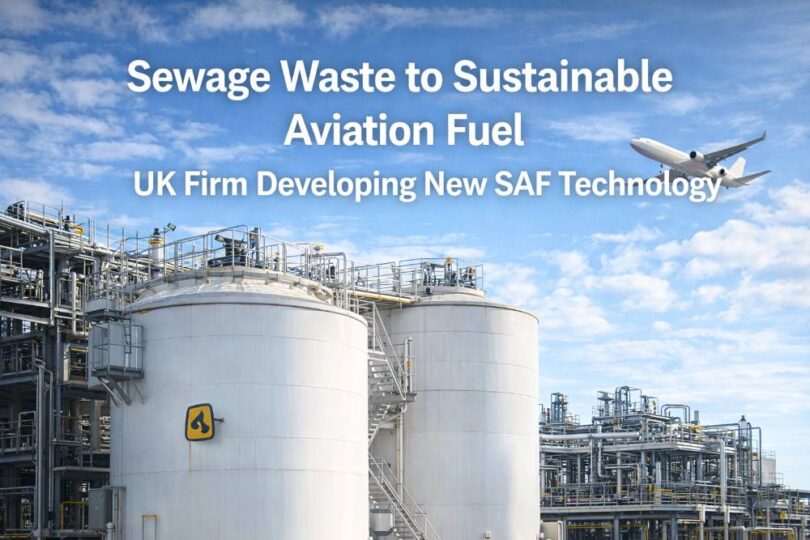
Sewage sustainable aviation fuel technology is being developed in the United Kingdom as part of efforts to reduce aviation emissions while creating new uses for waste generated by water treatment systems.
Firefly Green Fuels, a Bristol-based company focused on sustainable aviation fuel (SAF), is developing a process that converts treated sewage waste, known as biosolids, into aviation fuel suitable for commercial aircraft.
The company is building a commercial processing facility in Harwich, Essex, where sewage-derived feedstock from water utilities will be converted into SAF. Several UK water companies have agreed to provide biosolids for the project.
The initiative reflects growing interest in waste-to-fuel pathways as aviation seeks to reduce its carbon footprint.
How sewage sustainable aviation fuel could support aviation decarbonisation
The development of sewage sustainable aviation fuel highlights the expanding range of feedstocks being explored to produce lower-carbon aviation fuels.
Sustainable aviation fuel is widely viewed as one of the most practical near-term options for reducing emissions from aviation, a sector where electrification and hydrogen solutions remain technologically challenging for long-haul flights.
SAF can be produced from a variety of biological and waste materials, including agricultural residues, used cooking oil, municipal waste and industrial by-products.
In the case of Firefly’s approach, treated sewage waste from wastewater treatment plants is processed into fuel that can be used within existing aircraft engines and fuel infrastructure.
James Hygate, CEO of Firefly Green Fuels, said the technology could address both waste management and aviation emissions.
“Our business exists to solve the issue of sewage by turning this waste into sustainable fuel for aviation,” Hygate said.
Commercial deployment planned in the UK
The Harwich facility is expected to become the company’s first commercial plant, converting sewage-derived feedstock into sustainable aviation fuel at industrial scale.
Firefly has also secured a long-term supply agreement with airline Wizz Air covering a 15-year period for the purchase of sustainable aviation fuel.
Industry analysts expect global demand for SAF to increase rapidly over the coming decades as governments introduce aviation decarbonisation policies and airlines seek alternatives to conventional jet fuel.
Waste-based fuels are attracting particular interest because they can support circular economy models by turning waste streams into usable energy resources.
Projects that combine waste management with fuel production could play an increasingly important role as aviation works to meet long-term climate targets.
Further coverage of emerging climate technologies can be found in the Technology & Innovation section of Climate Global News.