


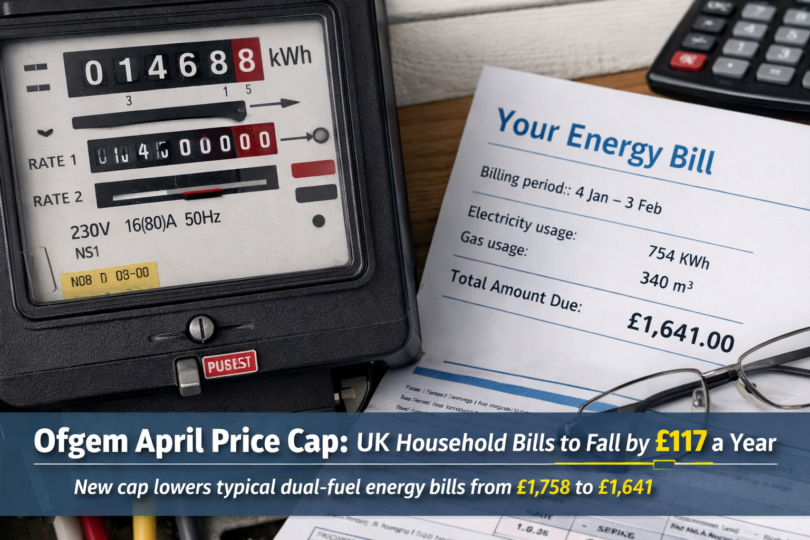
The Ofgem April price cap announcement confirms that household energy bills will fall from 1 April, offering modest relief to millions of homes across Great Britain. The energy regulator has reduced the cap for a typical dual-fuel household paying by direct debit from £1,758 to £1,641 per year — a decrease of £117 annually, or around £10 per month.
The energy price cap, set quarterly by Ofgem, limits the maximum unit rates and standing charges suppliers can apply to customers on standard variable and default tariffs. While it does not cap total bills, it ensures prices reflect underlying wholesale and network costs.
What the Ofgem April Price Cap Announcement Means for Consumers
The latest adjustment reflects a combination of easing wholesale energy costs and changes to how certain environmental and social levies are funded. Recent government measures have shifted some policy costs away from electricity bills and into general taxation, reducing pressure on consumer tariffs.
Although the reduction represents a meaningful improvement compared to previous quarters, overall energy costs remain higher than pre-crisis levels due to sustained network investment and ongoing market volatility.
For households using average levels of gas and electricity, the revised cap equates to savings of roughly £117 per year. Actual savings will vary depending on region, tariff type and consumption levels.
Industry Reaction to the Ofgem April Price Cap Announcement
Energy suppliers have broadly welcomed the development. Greg Jackson, CEO and founder of Octopus Energy, said:
“It’s great to see the price cap come down. We’ve long campaigned to shift levies off electricity, and today we’re seeing the impact – with bills falling about £10 a month. Customers will welcome this, and we’ll keep pushing for more changes to cut bills further.”
The adjustment may also influence switching behaviour in the retail energy market, as suppliers continue to reintroduce competitive fixed tariffs below the cap level.
Further details on the cap calculation methodology and regional unit rates are available directly from Ofgem’s official guidance.
Read more energy market coverage in our Energy section.