


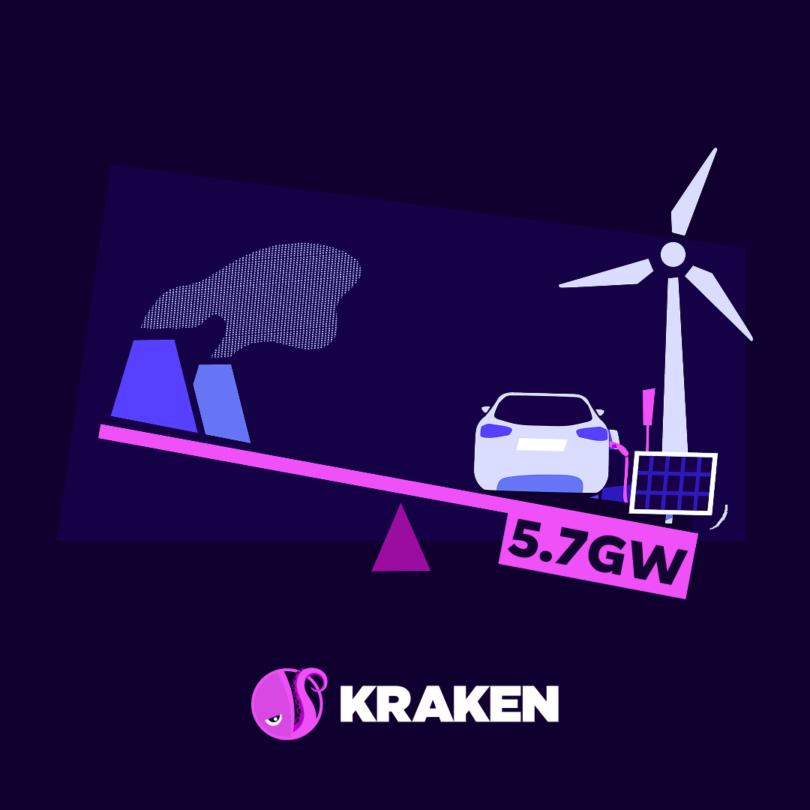
Energy technology platform Kraken has said it now manages more flexible, dispatchable clean power than Europe’s largest coal-fired power station, highlighting the growing role of software-led energy systems in the transition away from fossil fuels.
According to Kraken, its platform currently coordinates more than 5.7 GW of controllable clean energy capacity across multiple markets. This exceeds the installed capacity of Poland’s Bełchatów Power Station, Europe’s largest coal plant, which has long been a symbol of centralised, fossil-based electricity generation.
The comparison is not between physical power stations, but between different models of delivering capacity to the grid. While Bełchatów represents a single, centralised generation asset, Kraken operates a virtual power plant model, aggregating thousands of distributed energy resources into a coordinated system.
Kraken’s managed capacity includes around 3.2 GW of dispatchable generation and grid-scale battery storage, alongside approximately 2.5 GW of residential flexibility from assets such as electric vehicles and heat pumps. These resources can be controlled in real time to respond to demand, supply constraints and market conditions.
Electricity networks have historically been designed to meet short periods of peak demand, leaving infrastructure under-used for much of the time. Industry forecasts suggest global investment in transmission infrastructure could exceed US$200 billion by 2030, much of it driven by these infrequent peaks. In Europe, low-voltage distribution networks typically operate at a small fraction of their theoretical capacity.
Kraken’s approach focuses on flexibility rather than new physical build. By shifting when electricity is consumed or stored, the platform aims to flatten peak demand, reduce strain on networks and enable greater use of existing infrastructure. The company says this can lower system costs, reduce the need for grid reinforcement and support faster decarbonisation.
The platform continuously monitors electricity networks and energy markets, coordinating the charging and discharging of batteries and the operation of flexible generation, while adjusting the behaviour of consumer devices to align demand with periods of lower prices and cleaner power.
As electricity systems move away from reliance on large fossil-fuel power stations, virtual power plants are increasingly being explored as a way to deliver capacity, resilience and reliability through distributed assets rather than centralised infrastructure.
Commenting on the milestone, Devrim Celal, Chief Flexibility and Marketing Officer at Kraken, said the scale of managed flexibility now being deployed demonstrates that virtual power plants are moving into the mainstream of electricity system operation.
Kraken is also a co-founder of the Mercury Consortium, an industry initiative focused on developing common technical standards to improve interoperability between devices such as electric vehicle chargers, heat pumps and home battery systems.