


Heat pump vs gas boiler UK comparisons are gaining renewed attention as new data highlights differences in efficiency, running costs and customer satisfaction during periods of energy market volatility.
New figures released by Octopus Energy suggest growing interest in heat pumps, alongside evidence from real-world installations indicating that the technology can outperform conventional gas boilers under certain conditions.
The company has launched a performance dashboard that aggregates anonymised operational data from heat pumps installed across UK homes, providing insight into efficiency and cost trends over time.
Heat pump vs gas boiler UK efficiency and cost performance
The data indicates that heat pumps can deliver significantly higher efficiency compared with gas boilers. According to the analysis, systems achieved an average coefficient of performance (COP) of 4.11 over the past month, meaning more than four units of heat were generated for every unit of electricity consumed.
By comparison, gas boilers typically operate at lower efficiency levels, reflecting the energy losses inherent in combustion-based heating systems.
Over a longer period, the reported seasonal performance factor (SPF) stood at 3.68, suggesting sustained efficiency across varying weather conditions.
Cost comparisons also indicate that a majority of households using heat pumps experienced lower annual heating costs than they would have with gas boilers. The data suggests that around 80% of systems were cheaper to run over the past year, with average savings estimated at approximately £219 for users on specific tariffs.
Customer experience during winter conditions
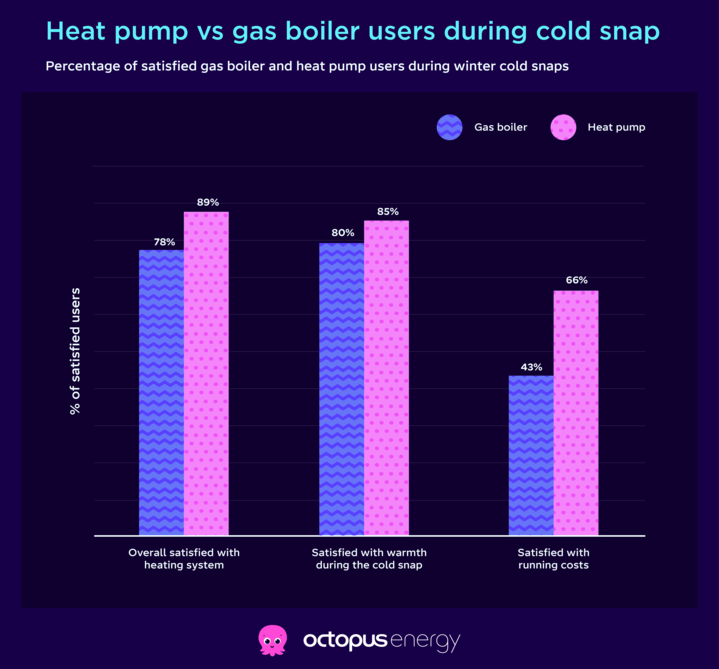
Survey data released alongside the performance figures indicates relatively high levels of user satisfaction with heat pump systems, including during colder periods.
According to the findings, 89% of respondents reported overall satisfaction with their heating system, while 85% said they were satisfied with warmth levels during a winter cold snap.
Responses also highlighted differences in perceived running costs, with a higher proportion of heat pump users reporting satisfaction compared with gas boiler users.
The data comes as the UK continues to assess pathways for decarbonising residential heating, a sector that remains heavily reliant on natural gas.
Industry context and policy relevance
The findings contribute to an ongoing debate around the role of heat pumps in the UK’s energy transition, particularly in the context of energy security, price volatility and emissions reduction targets.
Heat pumps are widely considered a key technology for reducing carbon emissions from buildings, although deployment continues to face challenges including upfront costs, consumer awareness and infrastructure readiness.
Real-world performance data is increasingly seen as important in informing both consumer decisions and policy development, particularly as governments seek to balance affordability with long-term decarbonisation goals.
As energy markets remain sensitive to global events, technologies that reduce reliance on imported fossil fuels are expected to play a growing role in shaping the UK’s heating strategy.