


EV charging and energy storage infrastructure is evolving rapidly as electrification accelerates, with new high-voltage components emerging to support more efficient, compact and scalable systems. Recent developments in power electronics are enabling faster EV charging, improved grid stability and more effective integration of renewable energy sources.
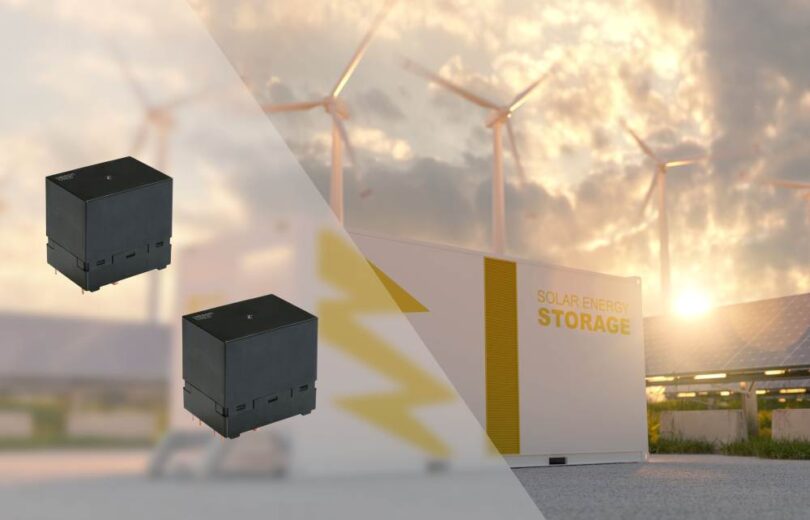
One such development comes from OMRON Electronic Components Europe, which has introduced a new series of high-voltage DC relays designed for use in energy storage systems (ESS) and electric vehicle charging infrastructure. These components are engineered to handle high currents and voltages, supporting the increasing demands placed on modern electrification systems.
The relays are designed to replace traditional contactors, allowing manufacturers to integrate them directly onto printed circuit boards. This approach enables more compact system designs, improved reliability and reduced need for manual assembly processes. As electrification systems scale, such design efficiencies are becoming increasingly important across both transport and energy sectors.
How EV charging and energy storage infrastructure is evolving
The rapid growth of electric vehicles and renewable energy is placing new demands on EV charging and energy storage infrastructure. Systems must now operate at higher voltages and currents while maintaining safety, efficiency and reliability.
In EV charging, particularly fast-charging networks, infrastructure must manage large power loads while ensuring consistent performance and minimising downtime. Similarly, grid-connected energy storage systems require robust switching and isolation components to manage fluctuating energy flows from renewable sources such as solar and wind.
As a result, compact high-power components are becoming critical to system design. By enabling higher power density and improved thermal performance, these technologies support the transition towards more efficient and scalable electrification systems.
According to OMRON, the new relay series is capable of handling high-voltage applications at up to 1500V DC, with carrying and breaking currents suitable for both ESS power conditioning systems and EV charger control units. This reflects a broader industry trend towards higher-capacity systems designed to support increasing energy demand.
In addition, reducing energy loss within switching components is becoming a key priority. Lower contact resistance helps minimise heat generation and improves overall system efficiency, which is essential as infrastructure expands and energy systems become more decentralised.
These developments are closely linked to broader progress in the energy transition and electrified transport systems. As EV adoption grows and renewable generation increases, infrastructure must adapt to ensure reliable energy distribution and access.
Ultimately, innovations in EV charging and energy storage infrastructure are not only enabling faster charging and improved energy management but also supporting the wider shift towards low-carbon energy systems. As technology continues to advance, these components will play a central role in scaling electrification across industries.
For further technical details, visit OMRON’s G9KD relay product page.