

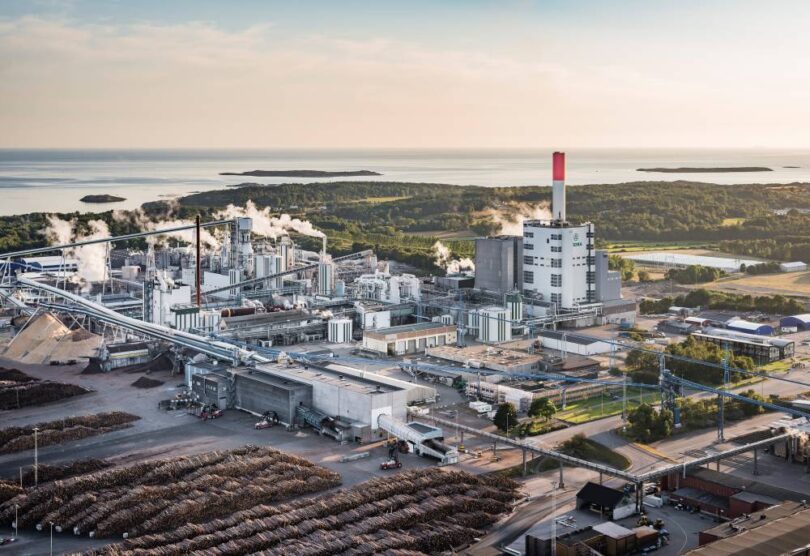
An electric natural gas project Sweden is advancing development plans as partners OX2, Södra and TES move forward with a proposed e-methane facility at the Värö peninsula in Varberg.
OX2, forest industry cooperative Södra, and energy project developer TES announced that the project has entered the Pre-Front-End Engineering Design (Pre-FEED) phase following an earlier feasibility study.
The planned facility aims to produce around 1.2 terawatt hours (TWh) of electric natural gas annually by combining renewable hydrogen with biogenic carbon dioxide captured from Södra’s pulp mill at Värö.
The partners say the project could increase the share of domestically produced fossil-free gas in Sweden’s gas grid while supporting the decarbonisation of energy-intensive industries.
Electric natural gas project Sweden targets industrial decarbonisation
The electric natural gas project Sweden focuses on producing e-methane, a synthetic gas chemically equivalent to fossil natural gas.
The fuel is produced by combining hydrogen generated through electrolysis powered by renewable electricity with carbon dioxide captured from industrial processes. In this case, the project will use biogenic CO₂ produced as a by-product at the Värö pulp mill.
Because synthetic methane is chemically identical to conventional natural gas, it can be transported and used in existing gas infrastructure without modification.
Potential applications include maritime fuel, industrial heat generation and feedstock for chemical production.
The Pre-FEED phase will involve detailed engineering design, assessment of grid connections and further development of permitting and commercial arrangements.
Funding and development timeline
The development phase will be partly supported by funding from the Swedish Energy Agency through the Industrial Leap programme, which supports projects aimed at reducing industrial emissions.
The programme forms part of the European Union’s Recovery and Resilience Facility and the NextGenerationEU initiative.
If the project proceeds beyond the current design phase, the partners expect the facility could begin operations in the early 2030s.
The project developers have also established a preliminary agreement with an energy company for the purchase of the majority of the planned production volume.
Developers say projects such as the Värö facility could contribute to growing European demand for renewable fuels as new regulations under the EU’s Renewable Energy Directive (RED III) come into effect.
Further coverage of emerging clean energy technologies can be found in the Technology & Innovation section of Climate Global News.