


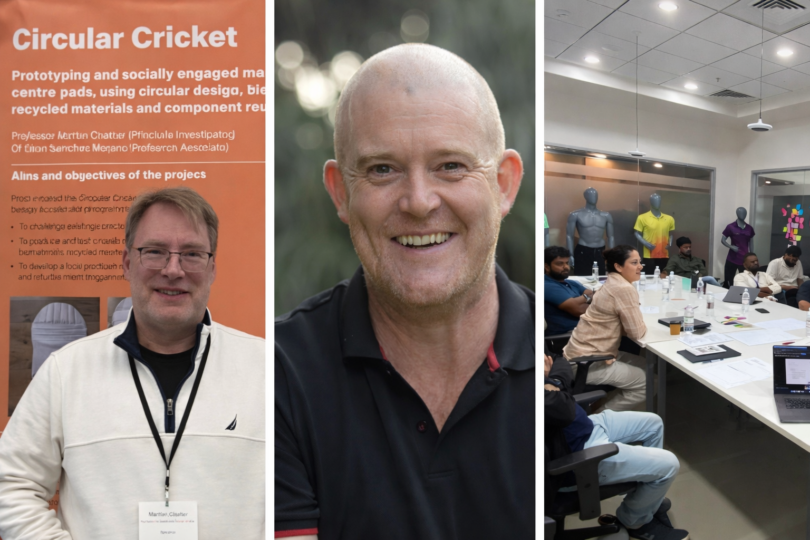
Circular cricket protective gear is being developed through a partnership between Decathlon and the Centre for Sustainable Design (CfSD) at the University for the Creative Arts (UCA), with the aim of reducing waste generated by cricket equipment.
The collaboration builds on CfSD’s Platform for Accelerating Sustainable Innovation in Cricket (PASIC), a research initiative focused on improving sustainability and product circularity within the sport.
Circular Cricket Protective Gear and Product Circularity Research
The partnership includes advisory work on enhancing product circularity in cricket protective equipment, structured innovation workshops, and a survey of players in India to better understand how protective gear is used, maintained and discarded.
Following a visit to a cricket manufacturing cluster in Northern India in 2025, CfSD conducted exploratory sessions with Decathlon Cricket’s team in Bangalore. This was followed by a five-day innovation programme concluding in February 2026, involving CfSD Director Professor Martin Charter and researcher Dr Lilian Sanchez-Moreno.
The programme included academy visits, interviews with customers and semi-professional players, and collaborative workshops examining both performance requirements and material impacts.
From Concept to Prototype
Insights from the process have led to the development of new product concepts aimed at improving durability, repairability and end-of-life outcomes for protective cricket equipment.
These concepts are now being translated into early-stage prototypes. The next phase will involve producing working models and testing them with players.
Professor Martin Charter noted that cricket is among the most equipment-intensive sports globally, with large volumes of gear produced annually. A significant proportion of damaged equipment is discarded or stored without reuse.
India’s Role in Sustainable Cricket Innovation
India represents both the largest cricket market and a major manufacturing hub. Decathlon manufactures approximately 70% of its products locally in India, reflecting the country’s central role in the global sporting goods supply chain.
The partnership seeks to integrate circularity principles — including extended product life, reduced material waste and improved recovery pathways — into future cricket protective equipment.