

As pressure mounts on agriculture to demonstrate measurable progress on climate and nutrient impacts, digital sustainability platforms are becoming increasingly central to how dairy farming performance is tracked, reported and verified.
A joint industry initiative known as the Milk Sustainability Center (MSC) has now expanded its availability to additional countries across Europe and North America, reflecting growing demand for farm-level data on emissions, nutrient efficiency and productivity. The platform’s expansion also coincides with the addition of a new strategic partner, highlighting how corporate-led digital tools are becoming embedded in food supply chains.
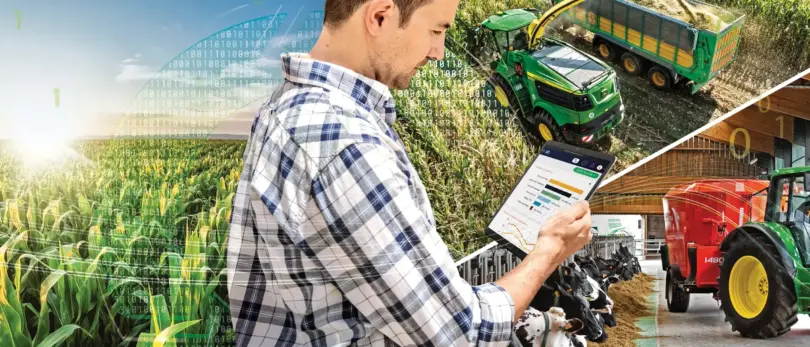
The MSC brings together data on crops, livestock and feeding systems into a single digital environment, enabling dairy farmers to monitor indicators such as nutrient use efficiency (NUE) and carbon dioxide equivalent (CO₂e) emissions across their operations. The platform is designed to reduce manual reporting burdens while supporting farmers in responding to increasingly complex sustainability requirements from processors, retailers and regulators.
Data-driven sustainability moves into the mainstream
Agriculture accounts for a significant share of global greenhouse gas emissions, with dairy farming under particular scrutiny due to methane emissions and nutrient losses. At the same time, food companies face rising expectations to report Scope 3 emissions, much of which originate at farm level.
Digital platforms such as MSC are emerging as a potential bridge between on-farm activity and downstream sustainability reporting. By aggregating operational data from multiple sources, these systems aim to support more consistent measurement of environmental performance while allowing farms to retain day-to-day operational control.
The Milk Sustainability Center was first initiated in 2023 through collaboration between agricultural equipment and technology providers, and is designed to be machinery- and software-agnostic. According to the platform’s developers, farmers can integrate data from more than 30 existing herd management, milking and feeding systems, and selectively grant access to advisers, veterinarians and supply chain partners.
Expansion across Europe and North America
The platform is now available in 13 countries across Europe and North America, with further expansion expected as sustainability reporting requirements continue to evolve. Importantly, access to the platform is offered on a subscription-free basis for farmers, lowering barriers to participation at a time when compliance costs are rising across the sector.
Industry representatives involved in the initiative have indicated that future developments may include benchmarking tools and recommendation features, aimed at helping farms compare performance and identify efficiency improvements. Such functionality could play an increasingly important role as sustainability metrics become linked to procurement standards, financing conditions and carbon accounting frameworks.
Lifecycle assessment enters the farm data ecosystem
The latest phase of the MSC’s development includes the addition of dsm-firmenich as a strategic partner, bringing lifecycle assessment (LCA) capabilities into the platform’s data flow. Subject to farmer consent, operational data from MSC can be transferred into Sustell™, dsm-firmenich’s LCA tool used to calculate product-level environmental footprints.
This integration reflects a broader trend towards connecting primary farm data with certified assessment methodologies, enabling more granular carbon footprint calculations across food value chains. While such approaches offer the potential for improved transparency, they also raise questions around data governance, verification and how sustainability metrics are ultimately used in commercial decision-making.
From a supply chain perspective, processors and consumer goods companies are increasingly seeking verified sustainability data to support climate disclosures and product claims. Digital platforms capable of standardising farm-level inputs are therefore likely to play a growing role in shaping how environmental performance is assessed and rewarded.
Balancing transparency, trust and control
As digital sustainability tools become more widespread, their success will depend not only on technical capability but also on farmer trust. Issues such as data ownership, consent, interoperability and the use of sustainability metrics in pricing or procurement decisions remain critical considerations.
While industry-led platforms can help reduce reporting complexity and improve consistency, observers note that transparent governance and clear safeguards will be essential to ensure that sustainability data supports genuine environmental improvement rather than becoming an additional compliance burden.
The expansion of the Milk Sustainability Center illustrates how digital infrastructure is increasingly being positioned as a core component of agricultural sustainability strategies. As climate, biodiversity and nutrient regulations tighten across Europe and beyond, such platforms are likely to become a permanent feature of modern dairy farming — shaping how sustainability is measured, managed and monetised across the food system.
Read more via: https://www.deere.co.uk/en-gb/our-company/news/milk-sustainability-center