

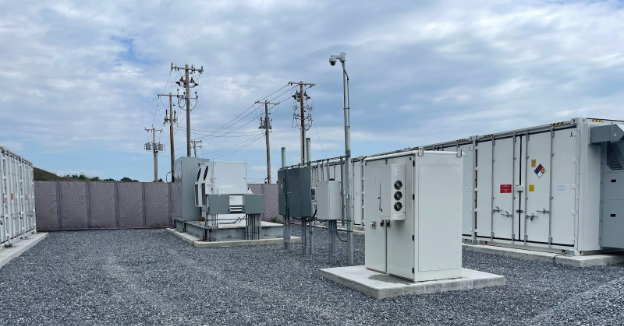
Encore Renewable Energy has completed its first battery energy storage project, connecting the 2MW South Street Storage system to the grid in Middlebury, Vermont. The 8MWh utility-scale facility is located next to the South Street Solar project and will provide demand mitigation services for Green Mountain Power (GMP) and its customers.
The lithium-ion batteries, supplied by KORE Power, were manufactured in Waterbury, Vermont. The project is expected to help GMP reduce costs during periods of peak demand by dispatching stored clean energy back into the grid when needed most.
Supporting grid resilience
The system adds to GMP’s growing network of distributed storage, which now exceeds 75MW, making it Vermont’s largest source of dispatchable power. GMP President and CEO Mari McClure said the project highlights the benefits of collaboration between local organisations to cut costs and support customers during high-demand events.
Chad Farrell, founder and co-CEO of Encore, said: “The past few years of intense storms and record heat have demonstrated the importance of a dependable electric grid, and we need more energy storage for that.”
Jay Bellows, CEO of KORE Power, added: “The South Street Storage project is a model of well-orchestrated grid modernization that is made possible when a developer, a manufacturer and a utility share the vision of delivering safe, reliable, clean power to customers.”
Energy storage for the clean transition
Integrating storage with renewable generation is seen as a crucial step for the clean energy transition. Battery systems can convert intermittent resources like solar and wind into dispatchable power, providing flexibility to the grid and reducing reliance on fossil fuels. With rising peak demand events driven by climate change, Vermont’s investment in distributed storage offers an example of how local projects can enhance energy resilience.