


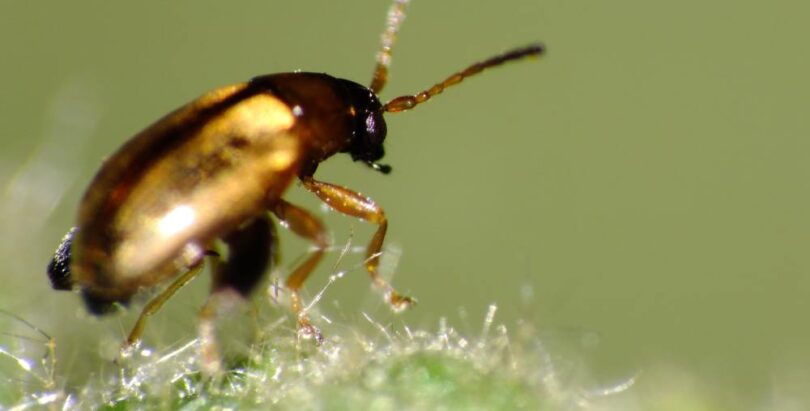
Sustainable pest management approaches for oilseed rape could be strengthened by a naturally derived olive compound that restores the effectiveness of existing insecticides against cabbage stem flea beetle (CSFB), according to new research from Rothamsted Research and ApresLabs Ltd.
In simulated field experiments, combining the olive-derived synergist SYN-A with the pyrethroid insecticide lambda-cyhalothrin increased cabbage stem flea beetle mortality from 20% to 75% and reduced plant damage by at least 50% compared to insecticide applications alone. The findings were published in Pest Management Science.
Sustainable Pest Management and Reduced Chemical Use
The study found that using just 20% of the standard insecticide rate together with SYN-A achieved 2.2 times greater pest control than applying the full recommended dose of lambda-cyhalothrin without the synergist. Researchers suggest this approach could allow farmers to significantly lower chemical inputs while maintaining crop protection performance.
Cabbage stem flea beetle is currently one of the most damaging autumn pests affecting oilseed rape production in the UK and across Europe. Resistance to pyrethroid insecticides has reduced the effectiveness of conventional sprays, while restrictions on neonicotinoid seed treatments have narrowed available control options.
Dr Samantha Cook of Rothamsted Research, who led the study, noted that growers face increasing challenges controlling CSFB due to regulatory changes and the development of insecticide resistance. The research indicates that synergists such as SYN-A may offer a method of improving control without increasing overall pesticide application rates.
Climate Pressure and Crop Resilience
Oilseed rape plays an important role in UK and European food systems, providing vegetable oils and animal feed. However, pest pressures have intensified in recent years, with resistance development and changing environmental conditions complicating crop management strategies.
Reducing the volume of synthetic insecticides applied to farmland is widely regarded as a priority within sustainable agriculture frameworks. Lower application rates can reduce environmental contamination risks, including impacts on soil health, water systems and non-target organisms. They may also reduce the embedded carbon associated with pesticide manufacture and distribution.
The researchers emphasise that the compound acts as a synergist rather than a standalone pesticide, enhancing the activity of existing authorised products. Such strategies may form part of integrated pest management (IPM) systems, which aim to combine biological, cultural and chemical measures to reduce reliance on high-input crop protection models.
Further reporting on agricultural innovation and environmental resilience can be found in our Agriculture coverage.