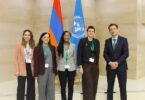


As the UN Biodiversity Conference (COP17) closes in Yerevan, Armenia, the Mediterranean climate journalism alliance AMWAJ is connecting journalists with experts from its member organisation CREAF. CREAF is a research centre specialising in terrestrial ecology and biodiversity. The alliance said the purpose of making CREAF at COP17 available to the media is to help interpret the summit’s outcomes through a Mediterranean lens.
The conference, held under the Convention on Biological Diversity, ran from 19 to 30 October 2026. AMWAJ issued its note from Barcelona on the final day of the summit.
Pressures facing Mediterranean countries
AMWAJ framed its offer around a central question: what the summit’s outcomes mean for Mediterranean countries. According to the alliance, these countries face intensifying droughts, water scarcity, desertification and biodiversity loss.
These pressures cut across several policy areas, including nature protection, water management and land use. That is why commentators and policymakers in the region are likely to look at how global biodiversity commitments agreed at international level will apply to local conditions.
CREAF at COP17: following the negotiations
According to AMWAJ, CREAF’s delegation has been following the negotiations in Yerevan. It has also been exploring how global biodiversity commitments can be turned into action on the ground, particularly through the role of regional and local governments.
The organisation said its work highlights the links between biodiversity loss, climate change and desertification. It also stresses the importance of scientific data in tracking progress towards global goals.
Expert commentary on policy and implementation
Alicia Pérez-Porro, Head of Policy Engagement at CREAF, is available to discuss the COP17 outcomes, policy implementation and the role of subnational governments. Other CREAF experts may also offer scientific perspectives on specific topics, subject to availability.
AMWAJ said it would arrange interviews or provide expert commentary for media covering the summit’s conclusions and their implications for the Mediterranean.
Outcomes report and Mediterranean-climate research
After the summit, CREAF will prepare an outcomes report for government bodies. The report will draw on the organisation’s monitoring of the negotiations.
For further context, AMWAJ pointed to CREAF’s latest report on the Mediterranean Climate Action Partnership (MCAP). The report examines shared climate-related challenges and opportunities for action across Mediterranean-climate regions.
Climate Global News has previously reported on the IUCN report on ecological integrity released at CBD CoP17 in Yerevan, which was launched at the opening of the conference.
Frequently asked questions
When and where did COP17 on biodiversity take place?
COP17 on biodiversity took place in Yerevan, Armenia, from 19 to 30 October 2026.
What is CREAF?
CREAF is a research centre specialising in terrestrial ecology and biodiversity. It is a member organisation of the AMWAJ alliance.
What was CREAF’s focus at COP17?
CREAF’s delegation followed the negotiations and explored how global biodiversity commitments can be turned into action on the ground, particularly through regional and local governments. Its work also highlights the links between biodiversity loss, climate change and desertification.
Who at CREAF is available to comment on the COP17 outcomes?
Alicia Pérez-Porro, Head of Policy Engagement at CREAF, is available to discuss the COP17 outcomes, policy implementation and the role of subnational governments. Other CREAF experts may also be available, subject to availability.
Will CREAF publish anything after COP17?
Yes. CREAF will prepare an outcomes report for government bodies, drawing on its monitoring of the negotiations.